Loray White: The Woman Who Said Yes to a Deal That Wasn’t Supposed to Be a Marriage
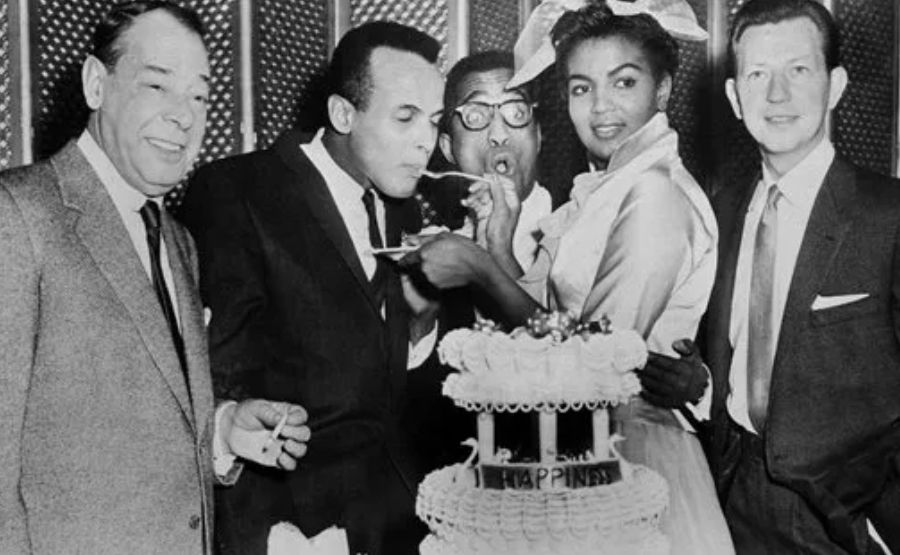
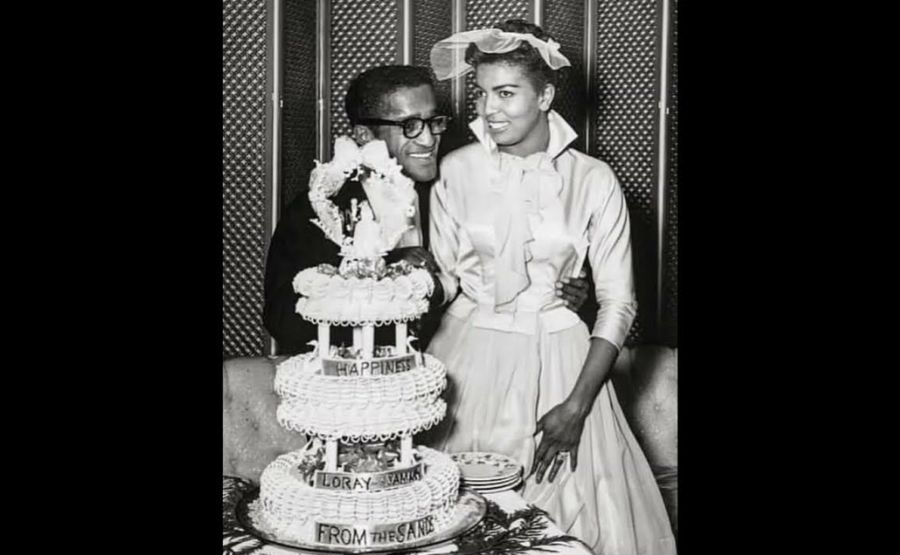
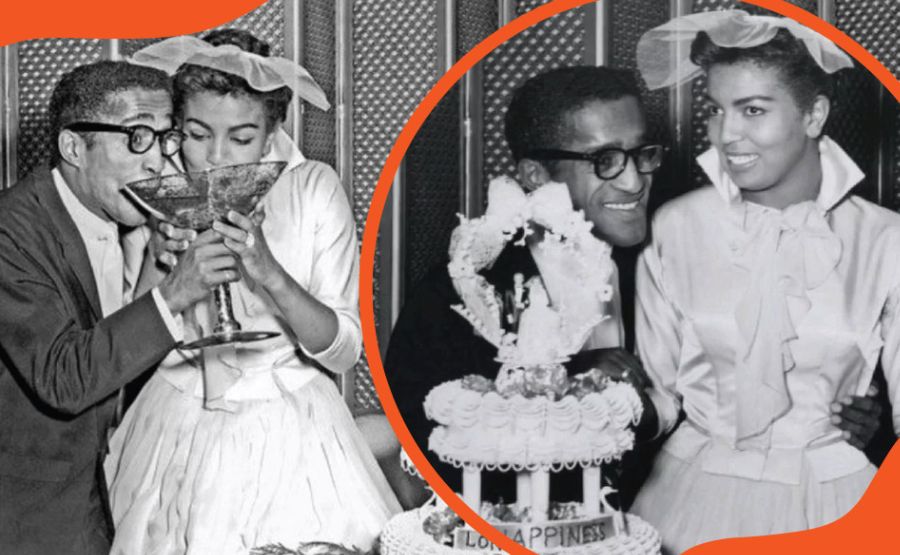
There’s a photograph from January 11, 1958.
Two people standing at a cake. Champagne glasses. Big smiles. The word “Happiness” is written right there in icing.
Looking at it, you’d think — what a beautiful wedding.
But the woman in that photo? She had agreed to marry a man under a contract. He was terrified. She was a young divorced mother just trying to survive in a city that barely noticed her. And by the time the night was over, that very same groom had tried to strangle her in the back of a car.
This is Loray White’s story.
And most people still don’t know her name.
Quick Bio
| Detail | Information |
| Full Name | Loray Betty White |
| Also Known As | Sonora |
| Born | November 27, 1934 |
| Birthplace | Houston, Texas, USA |
| Parents | Harold White & Joyce Mae Mills |
| Ethnicity | African-American |
| Education | Sawyer Business School; University of California |
| Profession | Dancer, Singer, Actress, Writer, PR Executive, Producer |
| Marriage | Sammy Davis Jr. (Jan 11, 1958 – April 1959) |
| Children | One daughter, Deborah DeHart White (pre-marriage) |
| Known Films | The Ten Commandments (1956, uncredited), The Notorious Cleopatra (1970), Miss Nymphet’s Zap-In (1970) |
| Career After | 1970–1981, entertainment writer, LBW & Associates PR (est . 1980), Producer (1981–2005) |
| Current Status | Unknown; whereabouts not confirmed as of 2026 |
Houston, Texas — Where It Started
Loray was born on November 27, 1934.
Houston back then was not an easy place for a Black girl with big dreams.
Opportunities for African-American performers were narrow and guarded. The stages that welcomed you were usually the ones nobody else wanted.
But somehow, Loray found them anyway.
Not a lot is documented about her early years. She had a mother named Joyce Mae Mills and a father named Harold White. Siblings — if any — remain unconfirmed. She kept that part of her life sealed tight.
What we do know is that she chased education alongside her passion. She went to Sawyer Business School, learning the practical side of things. Then later, the University of California.
That combination — business sense plus performing talent — would define the shape of her entire adult life.
See also “Ramzi Habibi: The Man Behind the Title, the Numbers, and the Name“
Before the Famous Marriage, There Was the Real Career
People remember Loray White mostly because of one year.
- Sammy Davis Jr.
But let’s pause on that, because she had a career before all of that, and it deserves to be seen.
She was a professional dancer. She was a singer. She worked the Las Vegas entertainment circuit, performing at a club called the Silver Slipper — right across the street from where some of the biggest names in the business were headlining.
Think about that for a second. She’s on the smaller stage, across from the big neon signs, doing her work quietly, night after night.
In 1956, she appeared as herself in a television special featuring Lionel Hampton and Herb Jeffries. Two major names in jazz. And she held her own there.
And then there’s the role most people overlook entirely. She appeared — uncredited — in Cecil B. DeMille’s The Ten Commandments. That film from 1956, one of the highest-grossing movies of the decade. Thousands of extras, enormous sets, Charlton Heston front and center. Loray was somewhere in that crowd, playing a Nubian slave.
Uncredited. No fanfare. Just the work.
That tells you something about the industry and what it offered Black women performers in the 1950s.
Later, she’d take two more credited film roles — The Notorious Cleopatra in 1970 and Miss Nymphet’s Zap-In that same year.
A 23-Year-Old Already Carrying So Much
By the time Loray crossed paths seriously with Sammy Davis Jr., she was 23 years old.
Already once divorced. Already raising a daughter named Deborah DeHart White.
So this wasn’t a young woman without a care in the world. This was someone who had already been through real adult weight and was managing it while still trying to build something for herself.
She and Sammy had gone out a few times before. Casually. Nothing serious.
Then 1957 happened. And everything got complicated in ways Loray could not have predicted.
The Mob, Kim Novak, and the Worst Reason to Get Married
Here’s the part that takes a moment to fully absorb.
Sammy Davis Jr. — already famous, already brilliant, already fighting racism every day just by existing in his world — fell hard for Kim Novak.
Novak was white. A massive movie star. The kind of actress newspapers called “the hottest female draw at the box office.”
In 1957, interracial marriage was illegal in half the states of America. A Gallup poll that year found that just four percent of Americans approved of interracial relationships.
Four percent.
Harry Cohn, who ran Columbia Pictures and had Novak under contract, was furious. He had mob ties — specifically to a racketeer named Johnny Roselli. Word got passed. Then the threats escalated hard.
Mobster Mickey Cohen contacted Sammy Davis Senior at a racetrack and delivered the message directly: Sammy Junior had 48 hours to marry a Black woman. Or they would put out his other eye and break both his legs.
Sammy had already lost his left eye in a car accident in 1954. This threat was not abstract.
He went to his friend, Chicago mobster Sam Giancana, looking for protection. Giancana was honest — he could cover Sammy in Chicago and Vegas, but not California. He couldn’t guarantee anything.
So Sammy Davis Jr. sat on a bed at the Sands Hotel and opened his address book.
His friend Arthur Silber Jr. was sitting right there, polishing a cowboy boot.
“What are you doing?” Silber asked.
“”I am seeking a spouse,” Sammy declared.
He found Loray’s name. He called her.
What Loray Agreed To
The offer Sammy made was a financial arrangement.
Between $10,000 and $25,000 upfront — sources differ on the exact amount — plus coverage of accumulated debts she had. In return, Loray would marry him, act as his wife publicly, and the marriage would dissolve before the year ended.
She said yes.
Why? We don’t really know. Maybe it was the money, which was significant for a working single mother in 1958. Maybe she and Sammy had a genuine warmth between them from their time together before. Maybe she felt for him in that awful moment. Maybe all of it at once.
But she said yes.
And on January 11, 1958, they got married in Las Vegas.
The Wedding That Wasn’t What It Looked Like
The ceremony had guests. Lights. That famous cake with “Happiness” on it. Photos would later show the two of them drinking from an oversized shared martini glass.
From the outside: celebration.
But during the reception, Sammy Davis Jr. drank. And drank.
And on the car ride back to the wedding suite, with Arthur Silber behind the wheel, Sammy — overwhelmed, drunk, broken by grief and fear and rage at a world that had just forced him into this — turned on Loray.
He tried to strangle her.
Silber stopped him. Pulled him off. Got him to his room.
Later that same night, Silber walked in to check on Sammy and found him with a gun pressed to his own head.
Silber wrestled it away.
“Why won’t they let me live my life?” Sammy said, crying, his coat ripped at the shoulder.
Loray White was somewhere in that hotel on her wedding night, having just survived being attacked by the man she’d agreed to marry as a business arrangement.
Sit with that for a moment.
They Never Lived Together. Not Once.
Despite the ceremony, despite the photos, despite the public appearance of a marriage — Loray and Sammy Davis Jr. never actually shared a home.
Not a single day.
The months passed. The mob pressure eased. Harry Cohn had a heart attack and died in February 1958, roughly a month after the wedding. The specific threat that had triggered this entire situation was gone.
But the marriage remained on paper. Strained. Sad. Purposeless.
By September 1958, Loray had had enough.
On the grounds of mental abuse, she filed for divorce.
That specific legal language — mental cruelty — tells us something real. She wasn’t just ending a business arrangement. She was naming what she had lived through.
The divorce was finalized in April 1959. Sammy paid her $10,000 in cash and covered $17,000 in accumulated bills. No children between them. Papers signed. Done.
After the Divorce — Who She Became
This is the part of Loray’s story that people almost never tell.
Because they stop at the divorce. They file her away under “Sammy Davis Jr.’s first wife” and move on.
But Loray kept going.
She had a daughter to raise. She had a life that belonged to her.
From 1970 to 1981, she worked as an entertainment writer for the Los Angeles Community News. That’s over a decade of steady professional work — writing about an industry she had once tried to perform in, now covering it from a different angle.
In 1980, she did something genuinely bold for a woman of her era. She started her own company.
LBW & Associates Public Relations.
Her initials. Her name. Her business.
Then, from 1981 all the way through to 2005 — twenty-four years — she directed and produced a project through her company called Yesterday, Today, Tomorrow, Los Angeles. A production that she stewarded for nearly a quarter of a century.
In 1999, she also worked with the Columbia Broadcasting System news department.
This is not the story of a woman who fell apart after a bad marriage. This is the story of someone who dusted herself off and built something real.
The Silence That Followed Everything
After 2005, Loray White went quiet.
No more public records. No interviews. No social media trail. Nothing.
As of 2026, her whereabouts are unknown. Whether she is alive is unconfirmed. She simply stepped out of the story and didn’t look back.
Maybe she earned that silence.
She had been pulled into one of Hollywood’s ugliest backroom moments — not because she sought power or fame, but because someone with a gun to his head needed a name from an address book. She did what was asked. She survived what followed. She built her own career, her own company, her own identity.
And then she chose to disappear on her own terms.
There’s something deeply human about that. Something that deserves more respect than pity.
What the Historical Record Leaves Out
Here is what strikes you when you put all of this together.
Every account of Sammy Davis Jr. / Kim Novak story centers on them. Their love. Their fear. Their legacy.
Loray White appears in most of those accounts as a footnote. A function. The woman who “agreed to marry him.”
But she had a name before that day. She had a daughter. She had a career. She had sat in her dressing room at the Silver Slipper and gotten ready for another night of performing, not knowing that a panicked phone call was about to change everything.
She agreed to help someone in genuine danger. She paid for it with violence on her wedding night. She spent months in a marriage that existed only on paper. She filed for divorce using legal language that quietly captured all of it.
And then she went and built a PR company that lasted decades.
That is not a footnote kind of life.
Final Words
Loray Betty White from Houston, Texas spent years being described in relation to someone else.
But here’s the fuller picture: she was a dancer who performed in packed clubs when the world barely saw her. She was an actress who showed up in one of the biggest films of the 1950s without a single credit to show for it. She was a mother, raising her daughter alone in an era that made that hard. She survived a night that would have broken most people. And she came out the other side with a business, a byline, and a production career that spanned nearly three decades.
The name Loray White deserves its own chapter. Not just a mention in someone else’s biography.
She was real. She mattered. And she chose her own ending — privacy, on her own terms.
That’s a kind of quiet power most people never manage.
FAQs
1. Who was Loray White?
Loray White was an African-American dancer, singer, actress, entertainment writer, and PR executive born on November 27, 1934, in Houston, Texas. She is best known as the first wife of entertainer Sammy Davis Jr., though she had her own career that extended well beyond that marriage.
2. Why did Loray White marry Sammy Davis Jr.?
The marriage was arranged under pressure. Sammy Davis Jr. was being threatened by mob figures connected to Columbia Pictures after his relationship with white actress Kim Novak became known. He needed to marry a Black woman within 48 hours or face serious physical harm. He offered Loray a sum of money to enter the marriage under the condition that it would end within a year.
3. How much money was Loray White paid?
Reports vary. Most sources cite somewhere between $10,000 and $25,000 as the upfront payment, with Sammy also later agreeing to cover $17,000 in bills during the divorce settlement.
4. Did Loray and Sammy Davis Jr. actually live together?
No. Despite being legally married, the two never shared a home at any point during their marriage.
5. What happened on their wedding night?
Sammy Davis Jr. became heavily intoxicated during the reception. On the drive to their wedding suite, he tried to strangle Loray. His friend and assistant Arthur Silber Jr. intervened. Later that same night, Silber found Sammy with a gun to his own head and disarmed him.
6. How long did the marriage last?
The wedding was on January 11, 1958. Loray filed for divorce in September 1958, citing mental cruelty. The divorce was finalized in April 1959 — just over 15 months total.
7. Did they have children together?
No. Loray did have one daughter from before the marriage — Deborah DeHart White — but she and Sammy Davis Jr. had no children together.
8. What was Loray White’s acting career like?
She appeared uncredited as a Nubian slave in Cecil B. DeMille’s The Ten Commandments (1956). She had credited roles in The Notorious Cleopatra (1970) and Miss Nymphet’s Zap-In (1970). She also appeared as herself in a 1956 television feature with Lionel Hampton and Herb Jeffries.
9. What did Loray White do after the divorce?
She reinvented herself professionally. She worked as an entertainment writer for the Los Angeles Community News from 1970 to 1981, founded her own PR firm LBW & Associates in 1980, produced and directed a project called Yesterday, Today, Tomorrow, Los Angeles from 1981 to 2005, and worked with CBS news in 1999.
10. What does “LBW” stand for in her company name?
The initials stand for Loray Betty White — her full name.
11. Is Loray White still alive?
As of 2026, her current whereabouts and status are unconfirmed. She quietly stepped away from public life after 2005 and has not appeared in any recorded interviews, news reports, or public records since.
12. What were the mob threats that led to the marriage?
Mobster Mickey Cohen, connected to Columbia Pictures president Harry Cohn, delivered a threat to Sammy Davis Senior: his son had 48 hours to marry a Black woman or they would take his remaining eye and break both his legs. Sammy had already lost his left eye in a 1954 car crash.
13. How is Loray White remembered today?
Mostly as a footnote in the Sammy Davis Jr. story — which is a significant injustice. She was a working entertainer before the marriage, survived real violence during it, and built a productive independent career for decades afterward. Her story deserves to be told in full, not reduced to a single dramatic year in someone else’s biography.
Keep creating moments of inspiration with Signature Magazine every day.