Lloy Coutts: The Woman Who Shaped Canadian Voices — and Asked Nothing Back
She spent four decades training actors to be heard clearly across a darkened theater.
Yet for most of those four decades, almost nobody outside the Canadian theater world knew her name.
Lloy Coutts — born Patricia Lloy Coutts in Alberta in April 1941, dead in Toronto in June 2008 — was one of the most consequential voice coaches in Canadian theater history. She shaped performers at the Stratford Festival, taught at York University and the University of Waterloo, directed plays across the country, and co-founded a school that helped define how actors trained on the West Coast.
She did all of this with almost zero public profile.
And she is remembered today, in part, because the University of Waterloo named a prize after her — a prize given annually to a student who demonstrates the kind of discipline and collaborative artistry she modeled throughout her career.
That is the measure of a teacher’s life. Not the spotlight. Succession.
Quick Bio
| Detail | Information |
| Full Name | Patricia Lloy Coutts |
| Professional Name | Lloy Coutts |
| Born | April 1941, Edmonton, Alberta, Canada |
| Died | June 23, 2008, Toronto, Ontario, Canada |
| Age at Death | 67 years old |
| Nationality | Canadian |
| Ethnicity | Caucasian |
| Education | National Theatre School of Canada (inaugural class, 1963); New York University |
| Career | Voice Coach, Acting Teacher, Theater Director, Dramaturg |
| Stratford Festival | Voice Coach, 1970–1981; returned to assistant direct, 1990–1991 |
| University Waterloo | Sessional Instructor, Theatre and Performance Program, 1994–2003 |
| Other Institutions | York University, Tarragon Theatre, Theatre Orangeville, Citadel Theatre |
| Co-Founded | Playhouse Acting School, Vancouver |
| Screen Credits | H.M.S. Pinafore (1981); Street Legal (1987) |
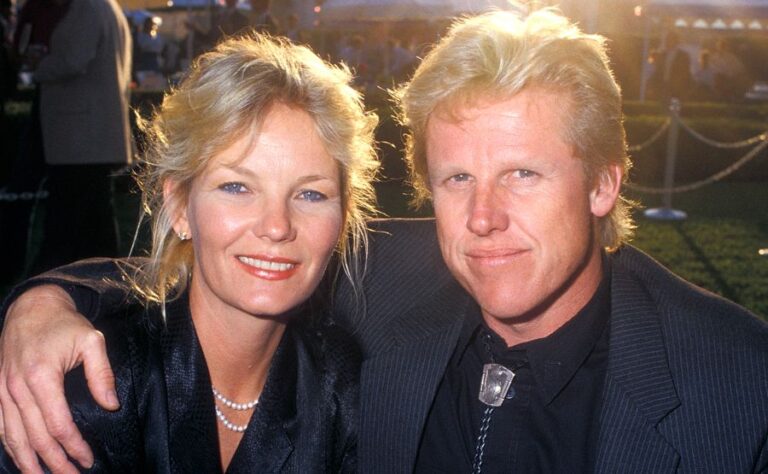
| Partner | Jeffrey Jones (actor; met at Stratford, Ontario) |
| Son | Julian Coutts (b. October 23, 1971) — actor and producer |
| Siblings | Three (survived her) |
| Cause of Death | Degenerative illness (specific diagnosis not disclosed publicly) |
| Legacy Award | Lloy Coutts Acting Prize — University of Waterloo, awarded annually |
| Archival Collection | Lloy Coutts Collection — University of Guelph Library |
| Net Worth | Not publicly disclosed; income derived from theater, coaching, and academia |
Edmonton, Alberta — Where It Began
Edmonton in the 1940s was not a cultural capital.
It was a working prairie city, practical and cold, not especially known for nurturing future theater professionals. Yet something in that environment produced Lloy Coutts — a woman for whom language and sound became a lifelong obsession.
Her early exposure to performance came through Edmonton’s Parks and Recreation system, of all places. She got involved in children’s theater through that program — a modest starting point that nonetheless gave her the foundational belief that theater could reach people at any age, in any setting.
The interest was not casual. For Coutts, drama was not recreation. By her own philosophy, it was something closer to a spiritual mission — a means of excavating truth through performance. That frame would guide every professional decision she made for the next five decades.
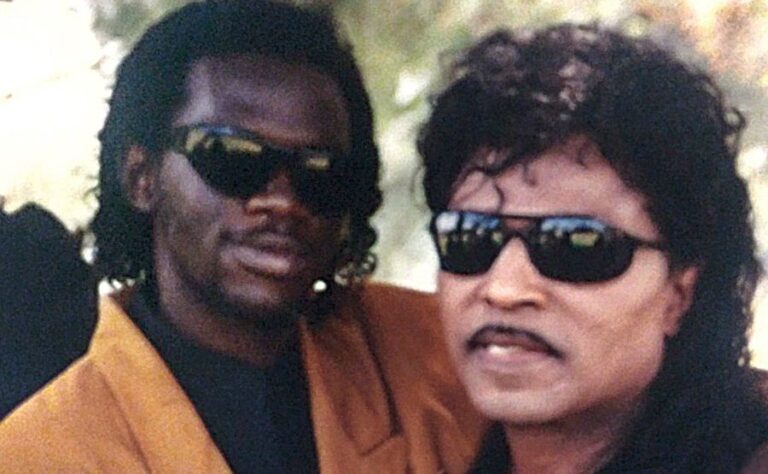
See also “Danny Jones Penniman Rapper: The Son of Rock and Roll’s Loudest Legend“
The National Theatre School — The Door That Changed Everything
In 1963, Lloy Coutts was accepted into the inaugural class of the National Theatre School of Canada.
That single fact establishes the caliber of her early trajectory. The NTS did not accept its founding class broadly. The institution was new, serious, and selective. Being among its first cohort placed Coutts alongside a generation of Canadian theater artists who would go on to define the field.
She didn’t stop there. She subsequently completed studies at New York University — crossing into the American academic system to refine her approach to voice and speech at an institutional level.
The combination of NTS training and NYU study gave Coutts something rare: a theoretical framework for voice work grounded in both Canadian and American pedagogical traditions. She brought that dual foundation back to Canada and applied it for the rest of her career.
Vancouver and the Playhouse Acting School
Before Stratford defined her career, Vancouver shaped her as a teacher.
Coutts became a founding member of the Playhouse Acting School in Vancouver — an institution established by the late Powys Thomas at the Vancouver Playhouse. Being a founding member means she helped build the curriculum, the methods, and the culture of an entire training program from the ground up.
That is not the same as being hired into an existing institution. It requires a particular kind of professional confidence and pedagogical vision.
The Playhouse Acting School helped establish a serious, Western Canadian approach to actor training. Coutts’s fingerprints were on its earliest formation.
Stratford Festival — Eleven Years at the Center of Canadian Theater
The Stratford Festival in Ontario is not a local theater event.
It is one of the premier classical theater festivals in North America — a destination for serious productions of Shakespeare and other canonical works, drawing top directors, designers, and performers. Working there as a voice coach is a credential of real weight.
Lloy Coutts served as the Stratford Festival’s voice coach from 1970 to 1981. Eleven continuous years in that role, working season after season with actors performing demanding classical text.
Voice coaching at Stratford is not correcting pronunciation. It is training actors to project power, grief, humor, and rage through language specifically shaped for large outdoor and indoor spaces. It requires both technical expertise and an understanding of dramatic intention.
By 1990 and 1991, Coutts had returned to Stratford in a different capacity — assistant directing productions of Julius Caesar and Much Ado About Nothing. She had moved from coaching to directing. Her role expanded at an institution that had every reason to trust her judgment.
The Universities — Teaching That Outlasted Her
Coutts taught at York University. She taught at the University of Waterloo. Both are serious Canadian institutions with theater programs of genuine academic standing.
Her tenure at the University of Waterloo’s Theatre and Performance program ran from 1994 In 1963, Lloy Coutts was accepted into the first class of the National Theatre School of Canada. to 2003. Nine years. She taught acting, contributed to the curriculum as a sessional instructor, and brought to the classroom the same precision she brought to the rehearsal room.
The institution honored that contribution in the most lasting way available to a university. They named a prize after her.
The Lloy Coutts Acting Prize is awarded annually by the University of Waterloo to a student demonstrating exceptional discipline, insight, collaborative skill, and performance ability. The description of the prize criteria reads as a portrait of Coutts herself: disciplined, insightful, collaborative.
A prize in your name, awarded to future artists, is a form of professional continuity that most teachers never achieve. Coutts earned it.
Director, Dramaturg, Maker of Productions
Her career was not limited to instruction.
Coutts directed and served as dramaturg at an impressive range of Canadian theaters: Tarragon Theatre, Theatre Orangeville, the Citadel Theatre in Edmonton — a return, in some sense, to the province where she began.
Her directing credits include The Double Bass, the Peter Süskind one-person play, starring Eric Peterson — a significant Canadian actor. She also directed Saliva Milkshake, a Howard Brenton piece, with Nicky Guadagni.
These are not amateur productions or regional afterthoughts. They are substantive theatrical works staged with professional casts in respected Canadian venues.
Her archival collection, housed at the University of Guelph, documents this body of work in physical detail: production files, correspondence, original scripts, notes, posters, reviews, and programs spanning her career from the 1960s through the early 2000s.
That collection exists because scholars considered her work worth preserving.
Screen Appearances — The Camera, Used Sparingly
Coutts appeared in two screen productions.
In 1981, she played a nurse in H.M.S. Pinafore — the Canadian television adaptation of the Gilbert and Sullivan comic opera. In 1987, she worked on Street Legal, the long-running Canadian legal drama series, this time as a dialogue coach rather than an on-screen performer.
Both credits reflect the same pattern: her relationship with the camera was professional, purposeful, and limited. She used the media to extend her craft, not to build a public profile.
She appeared when the work called for it. Then she returned to the stage and the classroom.
The Relationship With Jeffrey Jones — Complex and Private
Lloy Coutts met Jeffrey Jones in Stratford, Ontario.
The meeting made geographical sense. Jones, an American actor who would later gain fame in Amadeus, Ferris Bueller’s Day Off, and Beetlejuice, spent time working at the Stratford Festival as part of his stage career. Coutts was the festival’s voice coach. Their shared world was theater.
They entered a relationship and had a son together — Julian Coutts, born October 23, 1971.
What followed in Jeffrey Jones’s life became one of the most disturbing stories in American entertainment. In November 2002, Jones was arrested for possession of child sexual abuse material and for soliciting a 14-year-old boy to produce sexually explicit photographs between 2000 and 2001. He pleaded no contest in 2003, was sentenced to five years of probation, and was required to register as a sex offender for life. He was subsequently arrested twice more — in 2004 and 2010 — for failing to update his sex offender registration.
Coutts was not implicated in any of this.
What the period between those events and Coutts’s death in 2008 looked like for their family — whether they remained in contact, what Julian’s experience was, how Coutts processed the public exposure of someone she had shared her life with — none of that is documented publicly. She maintained the privacy that defined her entire life, even as the name she was connected to became associated with criminal conduct of the gravest kind.
She died in 2008 without ever having spoken publicly about it.
Net Worth — The Honest Account
Lloy Coutts’s net worth was never disclosed publicly and, given her career in theater and academia, was almost certainly modest by the standards applied to celebrity wealth.
This requires honest framing: no verified financial figure has ever been published for her. Multiple sources acknowledge this directly. The Grokipedia entry — one of the most research-grounded sources on her — makes no net worth claim. The IMDb record contains no financial information. Her Globe and Mail obituary, published July 5, 2008, addressed her legacy and family, not her finances.
What can be reasonably established:
Her income sources were professional wages from the Stratford Festival across 11 years, sessional academic fees from York and Waterloo, director and dramaturg fees from multiple Canadian theaters, and coaching income across her decades of practice.
Theater in Canada is publicly subsidized to a degree that American theater is not. The Stratford Festival, in particular, is a well-funded institution. Senior artistic roles there carry professional compensation — not wealth by financial market standards, but legitimate and stable creative-industry income.
Voice coaching, when offered privately, can generate meaningful income. Established coaches with decades of reputation can charge rates that reflect that reputation.
Over a career spanning roughly four decades of active professional work, from the 1960s through the early 2000s, a disciplined professional in her field would have accumulated savings and property.
The honest estimate — based on career trajectory, Canadian theater compensation norms, and academic sessional rates — is that Lloy Coutts was financially comfortable but not wealthy. A net worth in the range of several hundred thousand Canadian dollars, potentially with property in Toronto or Ontario, would be a defensible approximation. No figure should be stated with more precision than the evidence supports.
What she accumulated was not primarily financial. It was institutional: a named prize, a preserved archival collection, a son who built a creative career, and generations of actors who learned to speak clearly because she showed them how.
Death and Legacy — June 23, 2008
Lloy Coutts died on June 23, 2008, in Toronto, Ontario.
She was 67 years old. The cause was a degenerative illness — progressive, prolonged, privately borne. The specific diagnosis was not released publicly. Her obituary in The Globe and Mail noted she died surrounded by family and close friends, and announced a memorial service scheduled for early August.
She was survived by Julian and by three siblings.
The archival collection at the University of Guelph preserves the documentary record of her professional life: production files, correspondence, scripts, notes, and programs stretching across her career. Researchers studying Canadian theater history will find her work there, carefully documented.
The Lloy Coutts Acting Prize continues to be awarded at the University of Waterloo each year.
She asked for no monument. She received one anyway — in the form of an annual recognition to a student whose artistic qualities reflect her own.
Final Words
Lloy Coutts arrived in Edmonton at a time when no one would have predicted she would matter to the national theater of a country.
She went from a children’s theater in a prairie city to the most respected classical theater festival in Canada. She trained actors. She directed plays. She taught at universities. She helped found a school. She coached dialogue on screen.
She did this across four decades while maintaining a level of personal privacy that is almost impossible in the contemporary media environment.
The personal circumstances of her life — a relationship with a man who later committed crimes of unspeakable gravity, the raising of a son who went on to build his own creative career, the long battle with an illness that eventually took her — none of it became public narrative in her lifetime.
She is remembered, appropriately, for her work. Not her associations, not her struggles, not her finances.
That is precisely the kind of legacy she would have chosen.
FAQs
1. Who was Lloy Coutts?
Lloy Coutts — full name Patricia Lloy Coutts — was a Canadian voice coach, acting teacher, theater director, and dramaturg. She worked at the Stratford Festival for over a decade and taught at York University and the University of Waterloo. She is regarded as one of Canada’s premier voice coaches of the 20th century.
2. When and where was Lloy Coutts born?
She was born in April 1941 in Edmonton, Alberta, Canada.
3. Where did Lloy Coutts study?
She was accepted into the inaugural 1963 class of the National Theatre School of Canada — the institution’s founding cohort. She subsequently completed studies at New York University, where she specialized in voice and speech.
4. What was Lloy Coutts’s role at the Stratford Festival?
She served as the Stratford Festival’s voice coach from 1970 to 1981, eleven years in total. She later returned in 1990 and 1991 to assistant director Julius Caesar and Much Ado About Nothing.
5. What is the Lloy Coutts Acting Prize?
It is an annual award given by the University of Waterloo’s Theatre and Performance program to a student demonstrating exceptional discipline, insight, collaborative skill, and ability as a performer. It was established in recognition of Coutts’s contributions during her tenure as a sessional instructor from 1994 to 2003.
6. What did Lloy Coutts do on screen?
She appeared as a nurse in the 1981 Canadian television production of H.M.S. Pinafore, and served as dialogue coach on the Canadian legal drama series Street Legal in 1987.
7. Who was Lloy Coutts’s partner?
She had a relationship with Jeffrey Jones, the American actor known for Amadeus, Ferris Bueller’s Day Off, and Beetlejuice. They met while both were connected to the Stratford Festival in Ontario. Jones was later convicted of sex crimes involving a minor in 2003 and required to register as a sex offender for life. Coutts was not implicated in those events.
8. Did Lloy Coutts have children?
Yes. She had one son, Julian Coutts, born October 23, 1971. Julian became an actor and producer, appearing in The Peacemaker (1997), The Crucible (1996), and voice work on Harley Quinn (2019).
9. What was Lloy Coutts’s net worth?
Her net worth was never publicly disclosed. She worked in theater, academia, and coaching — professional fields that provide stable but not celebrity-level compensation. A conservative estimate based on career length and field norms suggests financial comfort rather than wealth. No verified figure exists in any public record.
10. Where did Lloy Coutts teach besides Stratford?
She taught at York University and served as a sessional instructor in the Theatre and Performance program at the University of Waterloo from 1994 to 2003. She also worked as director and dramaturg at the Tarragon Theatre, Theatre Orangeville, and the Citadel Theatre in Edmonton.
11. What plays did Lloy Coutts direct?
Among her documented directing credits: The Double Bass, starring Eric Peterson, and Saliva Milkshake, starring Nicky Guadagni. She also assistant directed Julius Caesar and Much Ado About Nothing at the Stratford Festival.
12. Is there an archival record of Lloy Coutts’s work?
Yes. The University of Guelph Library holds the Lloy Coutts Collection, which contains production files, scripts, correspondence, reviews, programs, posters, and other materials relating to her career from approximately 1931 through 2002.
13. How did Lloy Coutts die?
She died on June 23, 2008, in Toronto, Ontario, after a prolonged battle with a degenerative illness. The specific medical diagnosis was not disclosed publicly. She died at the age of 67, surrounded by family and friends. Her obituary was published in The Globe and Mail on July 5, 2008.
14. What was Lloy Coutts’s lasting legacy?
Her legacy operates on three tracks: the annual Lloy Coutts Acting Prize at the University of Waterloo; the preserved archival collection at the University of Guelph; and the generations of Canadian actors and directors who trained under her influence at Stratford, in Vancouver, at multiple universities, and at theaters across the country.
Keep creating moments of inspiration with Signature Magazine every day.