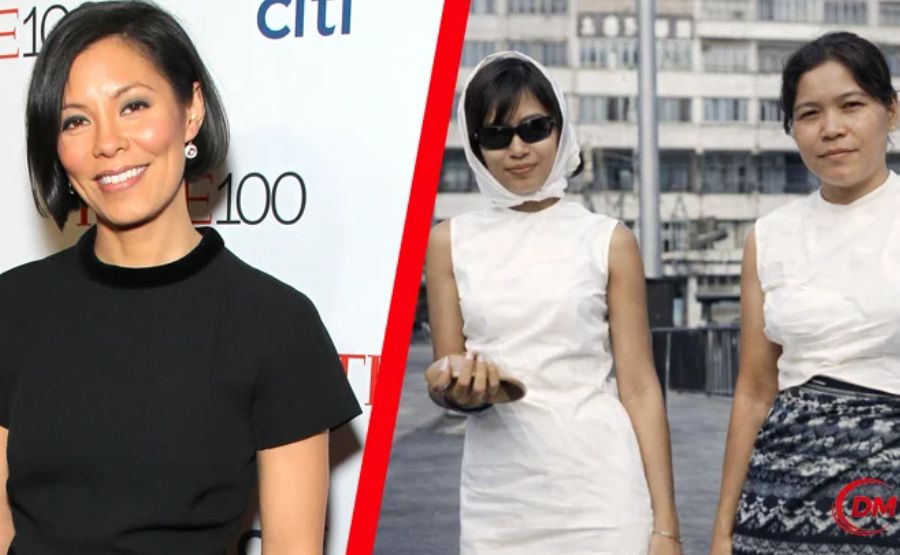
Tin Swe Thant: The Full Story — Immigration, Identity, Family, and Net Worth
She never sought a headline. Yet the life of Tin Swe Thant — a Burmese-born immigrant who fled a military dictatorship, studied political science at one of America’s elite colleges, and raised one of American television journalism’s most prominent voices — deserves to be told in full.
Most people encounter her name only as a footnote in her daughter Alex Wagner‘s biography. That framing does her a disservice. Tin Swe Thant’s journey from colonial-era Rangoon to Washington, D.C. is not supporting material. It is a story of reinvention, cultural loss, deliberate survival, and the quiet, enormous work of motherhood across two worlds.
Quick Bio
| Detail | Information |
| Full Name | Tin Swe Thant |
| School Name (Colonial Era) | “Maureen” (given name: “Maureen Thant Gyi”) |
| Birthplace | Rangoon (now Yangon), Burma (now Myanmar) |
| Ethnicity | Burmese |
| Immigration to USA | 1965, fleeing military dictatorship |
| Education | Swarthmore College, Pennsylvania (Political Science) |
| Early Career | Teamsters union; Alliance for Labor Action |
| Husband (divorced) | Carl Wagner (Democratic strategist; d. June 23, 2017) |
| Daughter | Alex Wagner (journalist, MSNBC; b. November 27, 1977) |
| Son-in-Law | Sam Kass (former White House chef; m. August 30, 2014) |
| Granddaughter | Cy |
| Current Residence | Long Island, New York (as of latest reports) |
| Net Worth | Not publicly disclosed; no credible estimate available |
| Social Media | Private Instagram; not active publicly |
Born in Rangoon, Named by a Colonizer
Tin Swe Thant entered the world in Rangoon, Burma — a city then shaped by the final, restless decades of British colonial authority.
The timing mattered. When she began attending English-language schools in Rangoon, colonial education policy required students to register under Western names. Burmese names, by administrative decree, did not exist in the classroom.
Her father, known in family accounts as U Thant Gyi, faced this requirement with what Alex Wagner later described as bewilderment. Searching for an acceptable Western name, he landed on “Maureen” — after the Irish-American Hollywood actress Maureen O’Hara, a popular figure of the era. And so a Burmese girl became, for administrative purposes, “Maureen Thant Gyi.”
That name followed her through Burmese schooling. Childhood friends from Rangoon still call her Maureen today. People she met after arriving in America know her as Swe. This split — two names, two eras, two sets of people — is not a quirky biographical detail. It represents something more painful: the systematic erasure of identity that colonial governance imposed on those it administered.
Alex Wagner wrote about this directly in her 2018 memoir FutureFace: A Family Mystery, an Epic Quest, and the Secret to Belonging. The renaming of her mother was, in Wagner’s framing, a “whitening” — a forced concession to an external power’s discomfort with her actual self.
See also “Alex Cowper-Smith: Net Worth, Career, and the Real Story Behind the Headlines“
The Decision to Leave: Burma in 1965
By 1965, Burma was no longer under British rule. It was under something arguably worse for a young woman with intellectual ambitions: a military junta.
General Ne Win’s government, which had seized power in 1962, instituted a rigid socialist programme and sharply curtailed civil liberties. The press was controlled. Political opposition was suppressed. Economic isolation was deliberate. For educated young Burmese seeking intellectual and professional opportunity, the country offered increasingly little.
Tin Swe Thant left for the United States in 1965. She was in her late teens or early twenties, travelling to a country she had never seen, in a language shaped by colonial schooling rather than native fluency.
She landed first in Washington, D.C. — a city that would become her home for decades. From there, she made her way to Swarthmore College in Pennsylvania, one of America’s most rigorous liberal arts institutions, where she registered not as Maureen but as Tin Swe Thant. It was, by one reading, the first act of formal self-reclamation after years of having been called by someone else’s name.
At Swarthmore, she studied political science — a fitting choice for a woman who had witnessed political upheaval firsthand and would spend the rest of her life living inside the currents of American political life.

The Teamsters, the Alliance, and the Man She Couldn’t Stand
After graduating from Swarthmore, Tin Swe Thant moved into the world of American labor politics. By 1971, she was working at the Teamsters union — one of the most powerful labor organisations in the United States, representing truck drivers, warehouse workers, and other blue-collar employees.
It was an unusual destination for a Southeast Asian immigrant with a political science degree. It was also, in retrospect, entirely consistent with who she was. She arrived in America during the late 1960s — a period of sustained social upheaval, labor organising, civil rights activism, and antiwar protest. A woman who had fled authoritarian rule had ample reasons to feel aligned with movements advocating for workers against entrenched power.
Her Teamsters work led to an interview for a position at the Alliance for Labor Action. The man conducting that interview was Carl Wagner — a Democratic political strategist from Lansing, Iowa, of Luxembourgish and Irish descent.
According to what Alex Wagner wrote in FutureFace, the first meeting was not warm. Tin Swe Thant could not stand him. Carl Wagner apparently returned the feeling in some measure. What followed was what Wagner described as a “meet-cute built on mutual hostility” — and then, eventually, marriage.
The improbability of that union is worth pausing on. A Burmese Buddhist woman who fled military dictatorship. A Catholic Midwestern man from rural Iowa. A first meeting defined by friction. And a marriage that produced a daughter who would spend her career parsing exactly these kinds of cultural and political intersections for television audiences of millions.
Carl Wagner: The Other Half of the Equation
Carl Wagner was not a peripheral figure in American politics. He co-chaired Bill Clinton’s 1992 presidential campaign — the campaign that ended twelve years of Republican White House occupancy. He worked with Senator Edward Kennedy. He was a longtime field manager and consultant within the Democratic Party, appearing on political programmes on MSNBC and contributing to campaigns across decades.
He and Tin Swe Thant settled in Washington, D.C. and raised one daughter together: Alexandra Swe Wagner, born November 27, 1977.
Their marriage eventually ended in divorce. Neither has spoken publicly about the specifics of why or when, and it would be inappropriate to speculate beyond what is known. What is documented is that they separated at some point and led separate lives afterward. Carl Wagner died on June 23, 2017, at age 72, at his home in Washington, D.C.
The middle name Tin Swe Thant’s daughter carries — “Swe” — is a permanent reminder of her mother’s Burmese identity, pressed into Alex Wagner’s legal name before Alex was old enough to choose it herself.

Motherhood: Between Two Cultures, Without a Map
Raising a mixed-race daughter in Washington, D.C. in the late 1970s and 1980s carried pressures that no parenting manual addressed.
Alex Wagner has recalled a moment at a diner when a stranger looked at her white father and Asian mother and asked, with the casual cruelty that strangers sometimes deploy, whether she was adopted. Tin Swe Thant navigated those moments without a script. She navigated them, by most accounts, with quiet dignity.
Her parenting philosophy, as Alex has described it publicly, combined high expectations with emotional directness. She reportedly told a young Alex: “I am not your friend, I am your mother.” That line — firm, clear, and rooted in a cultural tradition where parental roles carry specific weight — captures something essential about how she approached motherhood.
The assimilationist pressures of Washington, D.C. life meant that Tin Swe Thant’s Burmese identity was sometimes quieted during Alex’s childhood. Alex has written honestly about this — the sense that her mother’s Southeast Asian self was partially submerged beneath the demands of American daily life. That reality adds texture to what it cost to immigrate and integrate.
Yet the culture persisted. Through stories, through food, through the specific way a Burmese mother holds her children accountable, through what Alex carried into her journalism and eventually into a published memoir.
Net Worth: An Honest Accounting
The most direct answer to the question of Tin Swe Thant’s net worth is: it is not known, and any specific figure circulated online should be treated with scepticism.
She has never publicly disclosed financial information of any kind. She holds no publicly registered business, no documented investment portfolio, no salary history accessible to the public. She is a private retired individual, not a public figure whose finances are subject to disclosure.
Some websites list her net worth as part of articles primarily focused on her daughter Alex Wagner, whose estimated net worth ranges from approximately $3 million, derived from her MSNBC salary (reported at approximately $400,000 annually during her hosting tenure), book sales, CBS News contributor work, and related media activity. These are Alex’s figures, not her mother’s.
Tin Swe Thant’s own financial trajectory would have been shaped by: her education at Swarthmore, her career in labor politics and political work alongside Carl Wagner’s Democratic consultancy work, and whatever financial settlement and assets followed their divorce. None of these specifics are public.
What can be said with confidence is that she lives a private, modest retirement life on Long Island, New York. She maintains a private Instagram account that her daughter has referenced. She does not seek public attention, and she has not commercialised her story despite the fact that her daughter’s memoir brought considerable public interest to it.
The responsible conclusion: Tin Swe Thant’s net worth is undisclosed and genuinely unknown. Any number attached to her name online is an estimate without factual foundation.
The Book That Told Her Story to Millions
In April 2018, Alex Wagner published FutureFace: A Family Mystery, an Epic Quest, and the Secret to Belonging through One World/Random House. The book won widespread critical praise.
Its subject was, at its core, Tin Swe Thant’s life as much as Alex’s own. Wagner travelled to Myanmar to trace her mother’s origins, uncovering layers of family history, colonial experience, and the meaning of inheritance across generations. The book examined what it means to be biracial in America, what gets lost when immigrant families assimilate, and what can be recovered when someone chooses to look.
Critics noted the memoir’s emotional depth and its political intelligence. It brought Tin Swe Thant — her renaming, her immigration, her labor activism, her motherhood — to a reading audience of hundreds of thousands.
She did not tour with the book. She did not give interviews promoting it. She remained, as she has always remained, at a careful remove from the spotlight her daughter occupies.
Alex Wagner: What She Built From What She Was Given
To understand Tin Swe Thant’s impact fully, the contours of her daughter’s career require attention.
Alex Wagner attended Woodrow Wilson High School in Washington, D.C. and Brown University, graduating in 1999 with a degree in art history and literature. She built a career that moved through the Center for American Progress, music and culture magazine The Fader (where she served as editor-in-chief from 2004 to 2007), the Huffington Post, and George Clooney’s anti-genocide organisation Not on Our Watch.
From 2011 to 2015, she anchored Now with Alex Wagner on MSNBC. She served as a contributing editor at The Atlantic beginning in 2016. She was a co-anchor on CBS This Morning Saturday from November 2016 to March 2018. She co-hosted The Circus on Showtime. She hosted the first season of the Netflix reboot of The Mole in 2022. She anchored Alex Wagner Tonight on MSNBC from August 2022 through 2025.
On August 30, 2014, she married Sam Kass — formerly the personal chef and senior nutrition policy advisor to President Barack Obama — in a ceremony at Blue Hill at Stone Barns in New York. They have a daughter, Cy, making Tin Swe Thant a grandmother.
The “Swe” in Alex Wagner’s legal name — visible in her bylines and credentials — is a direct inheritance from her mother. That name travels with Alex onto every television set, every magazine page, every book cover. It is how Tin Swe Thant has been present in every room her daughter has entered professionally.
Life Today: Chosen Quiet, Earned Privacy
As of the most recent available information, Tin Swe Thant lives in Long Island, New York. She is in her mid-to-late seventies. She has a private Instagram account that Alex has referenced. She does not appear at public events connected to her daughter’s career.
She is a grandmother. She is a retired woman. She is a person who escaped authoritarian rule as a young woman, built a new identity in a new country under considerable pressure, and watched her daughter carry pieces of that story — including her own name — into one of the most visible media careers in American journalism.
That is the full picture, as fully as it can be drawn from the outside.
Final Words
There is a tendency, when writing about parents of famous people, to reduce them to origins — to portray them as mere backstory for the celebrity who emerged from them.
Tin Swe Thant resists that reduction.
She arrived in America in 1965 as a young woman alone, carrying a foreign name she had been forced to bury inside a borrowed English one. She studied political science at an elite institution. She worked in labor activism. She married across cultures at a time when interracial marriage in America was still controversial in many quarters. She raised a daughter in a city defined by power and politics, transmitted cultural pride under assimilative pressure, and eventually saw her story told — with her daughter’s full emotional honesty — in a book published by one of America’s major literary houses.
Her net worth, in the conventional financial sense, remains unknown. In every other sense, the accounting is easier. She shaped a journalist whose work has reached millions. She kept alive, in a Washington household, the memory of Rangoon — a city she left at nineteen and never fully stopped carrying.
That is a ledger that no dollar figure could capture.
FAQs
1. Who is Tin Swe Thant?
She is a Burmese-American woman born in Rangoon (now Yangon), Myanmar, best known as the mother of MSNBC journalist and author Alex Wagner. She immigrated to the United States in 1965 and became a naturalized American citizen.
2. What is the net worth of Tin Swe Thant?
It is not publicly disclosed. She is a private retired individual with no publicly documented assets, salary history, or financial disclosures. Any specific figure found online lacks credible sourcing.
3. Why was Tin Swe Thant given the name “Maureen”?
During her childhood schooling in colonial Rangoon, British-administered schools required students to register under Western names. Her father chose “Maureen” — inspired by actress Maureen O’Hara — as her school name. It became a form of colonial identity erasure that her daughter Alex later wrote about directly.
4. Where did Tin Swe Thant study in the United States?
She enrolled at Swarthmore College in Pennsylvania, a prestigious private liberal arts institution, where she studied political science.
5. Who did Tin Swe Thant marry?
She married Carl Wagner, a Democratic political strategist from Lansing, Iowa, of Luxembourgish and Irish descent. They met when she interviewed for a position at the Alliance for Labor Action, where he was conducting interviews.
6. Who is Carl Wagner?
He was a prominent Democratic political consultant who co-chaired Bill Clinton’s 1992 presidential campaign and worked with Senator Edward Kennedy, among others. He died on June 23, 2017, at age 72.
7. Did Tin Swe Thant and Carl Wagner divorce?
Yes. Their marriage ended in divorce. They led separate lives afterward until Carl Wagner’s death in 2017. No specifics about the timing or terms of the divorce are publicly available.
8. What is the name of Tin Swe Thant’s daughter?
Alexandra Swe Wagner — professionally known as Alex Wagner — born November 27, 1977, in Washington, D.C. The middle name “Swe” was taken directly from her mother’s name.
9. What is Alex Wagner’s book about, and how does it relate to her mother?
FutureFace: A Family Mystery, an Epic Quest, and the Secret to Belonging, published in April 2018, is Alex Wagner’s memoir about her Burmese-American heritage. It explores her mother’s immigration from Burma, the colonial renaming of her mother’s identity, and what it means to belong to two cultures simultaneously.
10. What career did Tin Swe Thant have in America?
After graduating from Swarthmore, she worked at the Teamsters union by 1971, engaged in labor organizing during a significant period of American workers’ rights activism. Her subsequent work at the Alliance for Labor Action led to her meeting Carl Wagner.
11. Does Tin Swe Thant have social media?
She has a private Instagram account, which her daughter Alex has mentioned publicly. She is not an active public presence on any social media platform and does not seek media attention.
12. Where does Tin Swe Thant live now?
Based on available reporting, she lives in Long Island, New York, where she has built an independent retirement life following her divorce from Carl Wagner.
13. Why does Tin Swe Thant matter beyond being Alex Wagner’s mother?
Her life represents the arc of Southeast Asian immigration to America during a critical political era — the post-colonial collapse of Burma, the military dictatorship of the 1960s, the American labor and civil rights movements, and the cultural negotiation required to raise a mixed-race child in Washington, D.C. Her story stands on its own terms as a document of what immigration demands and what it produces.
Keep creating moments of inspiration with Signature Magazine every day.