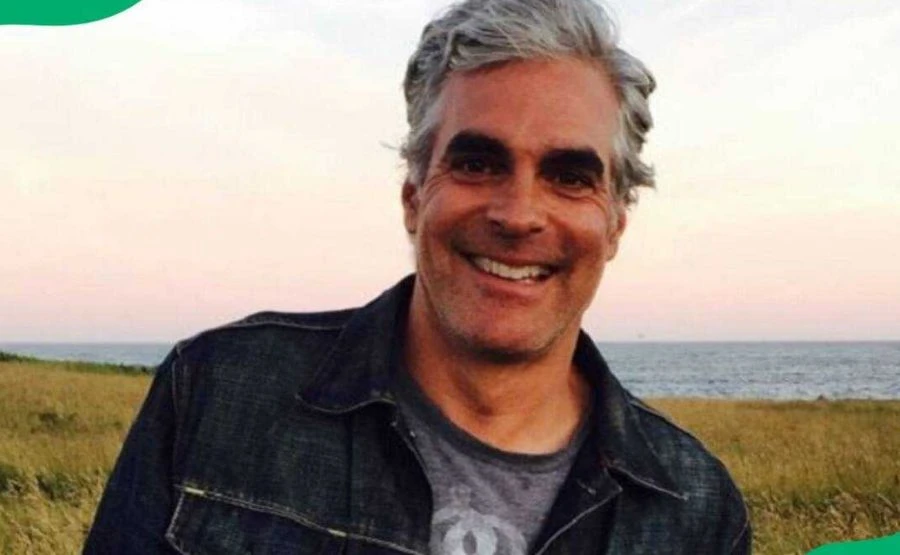
The Man Behind the Frame: The Full Story of Neil Joseph Tardio Jr.
Before Téa Leoni was a movie star, before Bad Boys or Deep Impact or Madam Secretary, she was married to a man most people have never heard of. He didn’t want the attention then. He doesn’t want it now. But the problem is that he didn’t require it. While she built her name in front of the camera, Neil Joseph Tardio Jr. was building something just as real behind it. A Peabody Award. Over 100 industry honors. Campaigns for Coca-Cola, Nike, and McDonald’s. A music video for the Red Hot Chili Peppers. A feature film in development. Two children. A second marriage that actually lasted.
Most people find him through a Google search for his ex-wife. What they discover is a career that stands entirely on its own.
Quick Bio
| Detail | Information |
| Full Name | Neil Joseph Tardio Jr. |
| Born | July 22, 1964 |
| Birthplace | Rye, New York, USA |
| Nationality | American |
| Education | Rye Country Day School; Boston University (BA, Film/Communications) |
| Profession | Commercial Director, Music Video Director, Screenwriter, Producer |
| First Marriage | Téa Leoni (June 8, 1991 – October 1, 1995) |
| Second Marriage | Julia Sayre Hine (June 1998 – present) |
| Children | Two (Max and Charlie, with Julia Sayre Hine) |
| Company | Third Street Mining Company |
| Key Award | Peabody Award (1992, Rock the Vote) |
| Emmy Nomination | Joint Man (Partnership for a Drug-Free America) |
| Current Base | Los Angeles, California |
Early Life: Growing Up in the Edit Room
Rye, New York isn’t Hollywood. It’s a quiet coastal town in Westchester County — tree-lined streets, a strong sense of community, old money moving quietly. But inside one particular house on that block, the film industry was very much alive.
Neil’s father, Neil J. Tardio Sr., ran Tardio Productions, a New York-based company that made television commercials. That meant scripts at the dinner table. That meant equipment in the hallway. That meant the language of storytelling wasn’t something Neil had to learn in school — it was already woven into how his family talked about the world.
His mother Margaret kept the household steady and grounded. Between the two of them, they gave Neil something rare: creative ambition with practical roots.
He attended Rye Country Day School, a private institution with an emphasis on serious academic development. From there he went to Boston University, one of the stronger communications programs in the country. He graduated with a BA focused on film and media production. He didn’t move to Los Angeles right away. He moved into the machine — the advertising industry — and started learning how decisions get made before a single camera rolls.
See also “Sanne Hamers: A Quiet Life Beyond the Public Spotlight“
The Turning Point: One Assignment Changed Everything
Fresh out of Boston University, Neil didn’t sit in a director’s chair. He earned his way there. He started as an agency producer and writer, grinding through the day-to-day at Saatchi & Saatchi and then DDB/Chicago — two of the most demanding advertising environments in the country. He learned how campaigns are built from the agency side. How a creative brief becomes a thirty-second film. How clients think, how directors pitch, how budgets live and die.
Then, in 1992, he made the jump. He joined Fahrenheit Films, a Santa Monica production company specializing in commercials and music videos. His first assignment as a director could have been a forgettable regional spot. It wasn’t.
His first assignment was Madonna’s Rock the Vote special.
He was 27 years old. He directed it. It won a Peabody Award — one of the most prestigious recognitions in media, typically reserved for journalism and documentary work of the highest public value. For a first directing credit, it was extraordinary. For a career trajectory, it was launch fuel.
He didn’t celebrate by chasing the spotlight. He got to work.
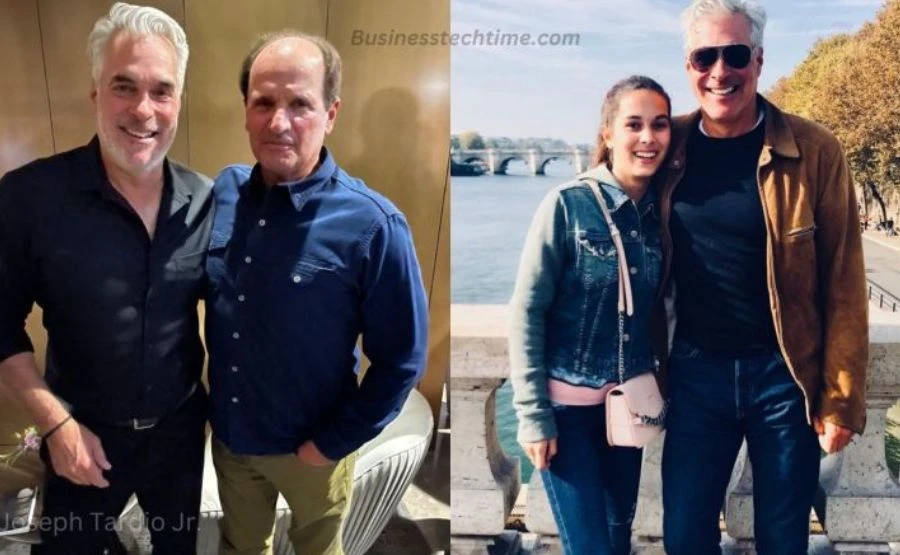
Career Rise: Thirty Years, One Hundred Honors
The year after Rock the Vote, Neil didn’t slow down. He directed 32 episodes of PE TV, a children’s sports program that aired first on Channel One and then picked up by ESPN. It sounds modest. Thirty-two episodes of consistent, quality content for young audiences is the kind of work that builds a real reputation in the industry — not the flashy kind, but the kind that gets you rehired.
He co-created and directed the web series Lifeisode. He moved into music videos, directing for Queen Latifah and the Red Hot Chili Peppers. His commercial roster reads like a Fortune 500 list: AT&T, Coca-Cola, Budweiser, ESPN, Nike, McDonald’s, Volkswagen, Virgin, Burger King.
His anti-drug spot Joint Man, made for the Partnership for a Drug-Free America, was nominated for an Emmy. That’s two career-defining awards connected to public service work — which says something about who he is as a director. He uses the language of advertising to make people feel something real.
The award shelf eventually included four Cannes Lions, four Clios, two London Art Directors Awards, twelve Addys, and thirty Tellys. Over 100 honors total.
His own production company, Third Street Mining Company, became the vehicle through which most of this work flowed. He later joined the roster at Mrs. Bond in 2015 for exclusive US representation, and then brought his work to Durable Goods, a production company that bridges established directors with major agency clients. The executive producer at Durable Goods described him as someone who had not only mastered agency execution but had genuinely embraced new media with an energy that felt fresh rather than forced.
His screenplay Son of Santa sold to United Artists. He’s also been developing a feature film, ShortCut Man, based on the critically acclaimed novel by P.G. Sturges. At various points he was reported to be working on a television series with Arrested Development creator Mitch Hurwitz. He’s also writing two children’s books.
He once said: “My passion for dialogue-driven storytelling led me to eventually find comedy. It’s been quite a journey, and the bottom line is that nothing beats great writing.”
That quote explains the whole career.
Personal Life: Two Marriages, One That Defined the Tabloids
Neil met Téa Leoni sometime around 1986, reportedly while both were on vacation. They dated for nearly five years before they married on June 8, 1991, at St. Luke’s Episcopal Church in Hope Township, New Jersey. The ceremony was quiet. No Hollywood fanfare.
At the time, Téa was still building her name. The Flying Blind sitcom wouldn’t air until 1992. Bad Boys was still four years away. They were two young creative professionals starting their adult lives, not two celebrities managing a public image.
Their four years of marriage overlapped with the period of Téa’s sharpest professional rise. As her roles got bigger and the press attention increased, Neil stayed behind the camera — literally and figuratively. There were no children from the marriage. On October 1, 1995, the divorce was finalized.
Neither of them has ever publicly explained why. There were no press releases, no interviews, no accounts of public conflict. Some have speculated that diverging career trajectories played a role. Others have pointed to reported trust issues, though these remain unverified. The honest answer is: no one outside that marriage knows.
What’s notable isn’t the divorce. It’s how they handled it. Completely privately. With apparent mutual respect. In an industry that profits from messy breakups, they gave it nothing.
Three years later, in June 1998, Neil married Julia Sayre Hine. The New York Times covered the wedding — a notable detail, given how private Neil tends to be. Julia had just left her role as a special marketing manager at Random House. She received a magna cum laude degree from Barnard College. Together they’ve built a life in Los Angeles, with two children: a son named Max and a daughter named Charlie.
He describes himself as a family man. Those who’ve worked with him describe a director who’s present, collaborative, and focused — not a difficult personality chasing ego.
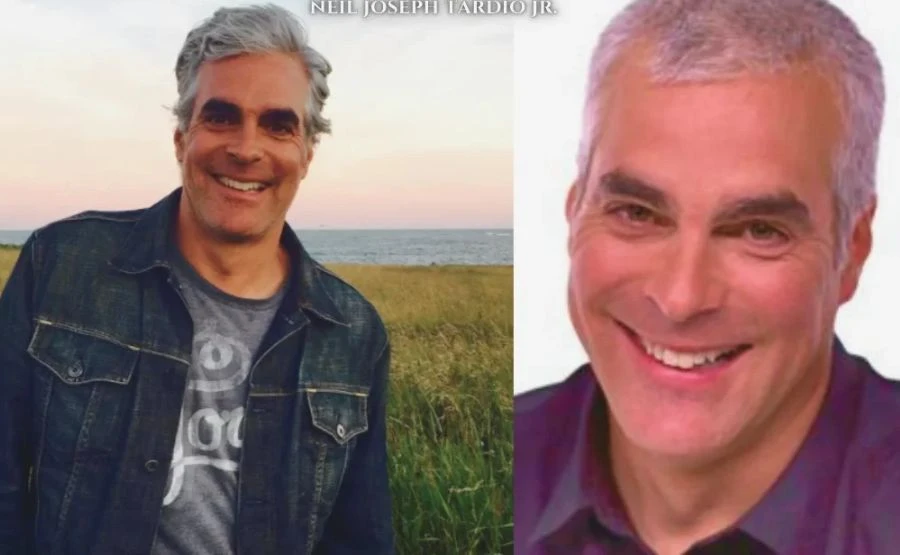
Controversies: What’s Real, What Isn’t
There’s very little here. Neil Joseph Tardio Jr. has spent thirty-plus years in an industry that creates drama professionally, and has managed to generate almost none personally.
There were rumors, circulated in corners of the internet, suggesting he was gay. These appear to have originated from his conspicuous absence from public life and his reticence to court any media attention — which some apparently read as something to hide. Two long-term marriages, including one that has lasted since 1998, address that directly. The rumors don’t appear to have come from anyone with direct knowledge or credible reporting.
His divorce from Téa Leoni drew more scrutiny than it deserved, simply because she became famous quickly after it ended. Some accounts have characterized the split as driven by “trust issues” — but this detail doesn’t appear in any verified source and should be treated as speculation, not fact.
The honest assessment: no confirmed controversies. No documented professional misconduct. No public legal disputes. In this industry, that itself is a kind of achievement.
Current Life: Still Directing, Still Writing
As of 2026, Neil is 61 years old and based in Los Angeles. He still runs Third Street Mining Company. He works with Durable Goods on commercial representation. His recent client work includes Bank of America, Kaplan University, Tim Hortons, and Domino’s.
He’s developing ShortCut Man as a feature film. He’s writing children’s books. He’s reportedly been working on a television series project. He keeps a low social media profile — some reports say he’s active on Instagram, others suggest he maintains minimal presence. Either way, he’s not chasing the algorithm.
His professional biography on Kids in the House, where he’s contributed as a parenting expert (notably on topics like nanny hiring and building parent-child relationships), shows someone who has fully committed to the identity of father alongside the identity of director. Those two things aren’t separate for him.
His net worth isn’t publicly verified. Estimates range from $2 million to $5 million, based on three decades of premium commercial work and production company ownership — but these are estimates, not confirmed figures.
Legacy: What He Leaves Behind
Here is what Neil Joseph Tardio Jr. leaves behind: a thirty-year body of work in one of the most competitive, talent-dense creative industries in the world, built entirely on the quality of the work itself. No reality show appearances. No celebrity memoir. No manufactured controversies to stay relevant.
He directed an anti-drug campaign that made people feel something strongly enough to earn an Emmy nomination. He directed a voter registration special that won a Peabody. He shot music videos that artists still remember fondly. He sold a screenplay to United Artists. He built a company. He raised a family. He kept going.
The directors who came up after him studied work like his — short-form storytelling with genuine emotional weight, comedy that felt human, casting that made thirty-second spots feel like real life. That influence doesn’t always come with attribution. It just shows up in the work of people who watched carefully.
There’s a particular kind of success that doesn’t require an audience’s applause to be real. Neil Tardio’s career is that kind of success.
He chose creativity over celebrity. His catalog proves that was the right call.
Conclusion
Neil Joseph Tardio Jr. built his business quietly, without chasing fame or relying on public interest. While many take his calling through Téa Leoni, his real legacy comes from many years of steady work behind the digicam. From dominating the Peabody Award at the beginning of his directing career to earning an Emmy Award nomination and more than 100 industry awards, he has proven that strong storytelling and field numbers go beyond footage.
His professional journey reflects a deep knowledge of quick-form storytelling, particularly in marketing and public mobile campaigns. He has created work that really connects with the audience, whether through emotional impact or grounded humor or not. Focusing on writing, curriculum, and craft instead of following trends created a recognition that has remained in place for over thirty years.
His lifestyle on the non-public stage suggests a similar experience of balance. After his brief first marriage, he built a stable family existence and devoted himself to it. In the end, his story chooses substance over light, showing that lasting happiness does not require regular interest to be real.
FAQ: What People Actually Search For
1. Who is Neil Joseph Tardio Jr.?
He’s an American commercial director, music video director, and screenwriter based in Los Angeles. He’s best known professionally for winning a Peabody Award for the 1992 Madonna Rock the Vote special, and publicly as the first husband of actress Téa Leoni.
2. What is Neil Joseph Tardio Jr.’s age?
He was born on July 22, 1964, making him 61 years old as of 2026.
3. Was Neil Joseph Tardio Jr. married to Téa Leoni?
Yes. They married on June 8, 1991, at St. Luke’s Episcopal Church in Hope Township, New Jersey, and divorced on October 1, 1995. They had no children together.
4. Why did Neil Tardio and Téa Leoni divorce?
The exact reason has never been publicly confirmed by either party. Speculation has included diverging career paths and reported trust issues, but neither has been verified by a credible source.
5. Who did Neil Joseph Tardio Jr. marry after Téa Leoni?
He married Julia Sayre Hine in June 1998. Julia was a magna cum laude Barnard College graduate and had worked as a special marketing manager at Random House.
6. Does Neil Joseph Tardio Jr. have children?
Yes — two children, Max and Charlie, with his second wife Julia Sayre Hine.
7. What is Neil Joseph Tardio Jr.’s most famous work?
The 1992 Rock the Vote campaign featuring Madonna, which won a Peabody Award. He’s also known for the Emmy-nominated anti-drug spot Joint Man, and commercial campaigns for Nike, Coca-Cola, ESPN, AT&T, and Volkswagen.
8. What awards has Neil Joseph Tardio Jr. won?
A Peabody Award, an Emmy nomination, four Cannes Lions, four Clios, two London Art Directors Awards, twelve Addys, thirty Tellys, and over 100 industry honors total.
9. What is Third Street Mining Company?
It’s Neil’s production company, through which he directs commercials, develops original scripts, and manages creative projects.
10. What is ShortCut Man?
A feature film Neil has attached to direct, based on the critically acclaimed novel by P.G. Sturges. It was in development as of the most recent available reporting.
11. Did Neil Tardio sell a screenplay?
Yes. Son of Santa was sold to United Artists. Details on its production status are not publicly confirmed.
12. Was Neil Joseph Tardio Jr. famous before his marriage to Téa Leoni?
He was already working in advertising and building a career, but the public recognition came largely after — and because of — the association with Leoni.
13. What is Neil Joseph Tardio Jr.’s net worth?
His exact net worth isn’t publicly confirmed. Estimates circulate between $2 million and $5 million based on his career, but these figures are unverified.
14. Is Neil Joseph Tardio Jr. active on social media?
He keeps an extremely low public profile. Some sources indicate a modest Instagram presence; he does not appear to maintain active public accounts on major platforms.
15. Where does Neil Joseph Tardio Jr. live now?
Los Angeles, California, where he continues his directing career and family life.
Keep creating moments of inspiration with Signature Magazine every day.