Chris Ciaffa: The Hollywood Producer Who Chose the Work Over the Spotlight
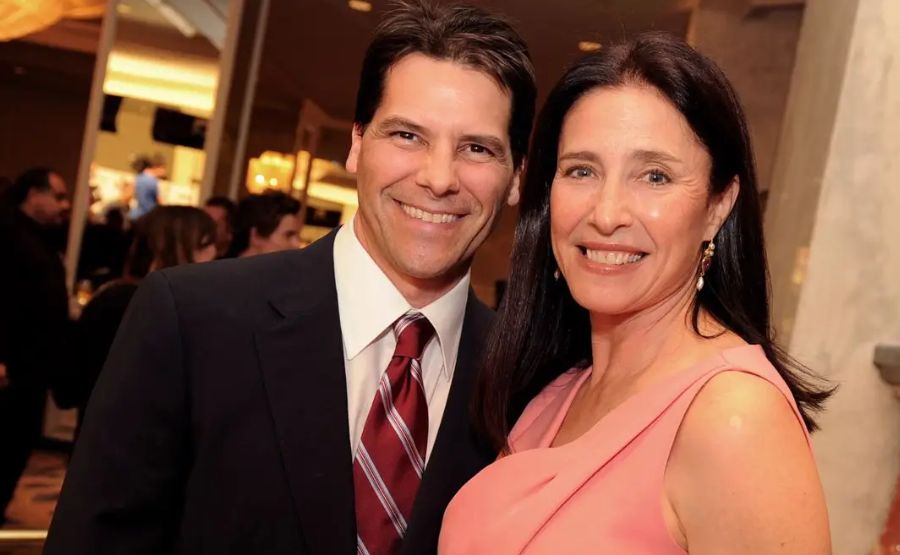
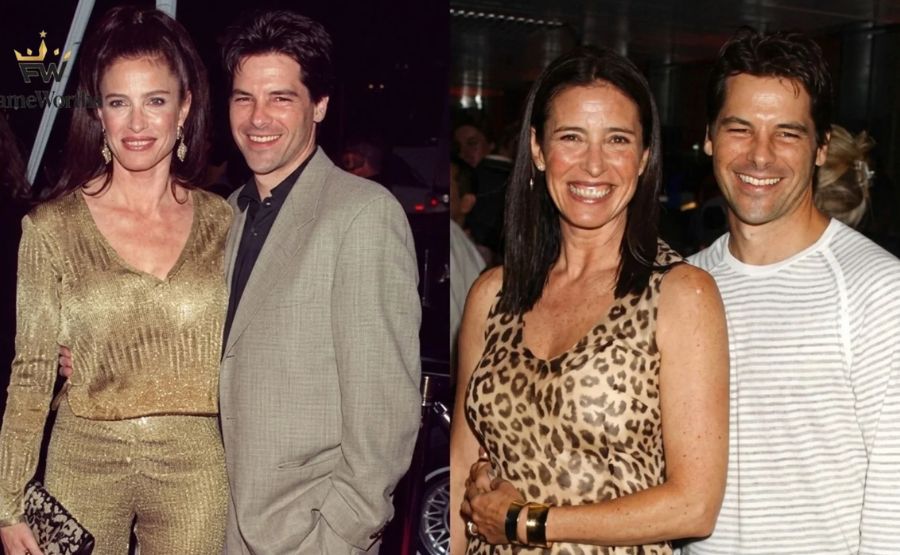
In an industry that runs on visibility, Chris Ciaffa has built a legitimate career by refusing to seek it. Born Christopher Ciaffa on April 28, 1963, he has spent more than three decades as a film producer and assistant director — working on projects that millions of people have watched without ever knowing his name.
That quiet professional authority is exactly what makes him worth understanding.
Quick Bio
| Detail | Information |
| Full Name | Christopher Ciaffa |
| Born | April 28, 1963 |
| Age (2026) | 63 years old |
| Nationality | American |
| Zodiac Sign | Taurus |
| Profession | Film Producer, Assistant Director |
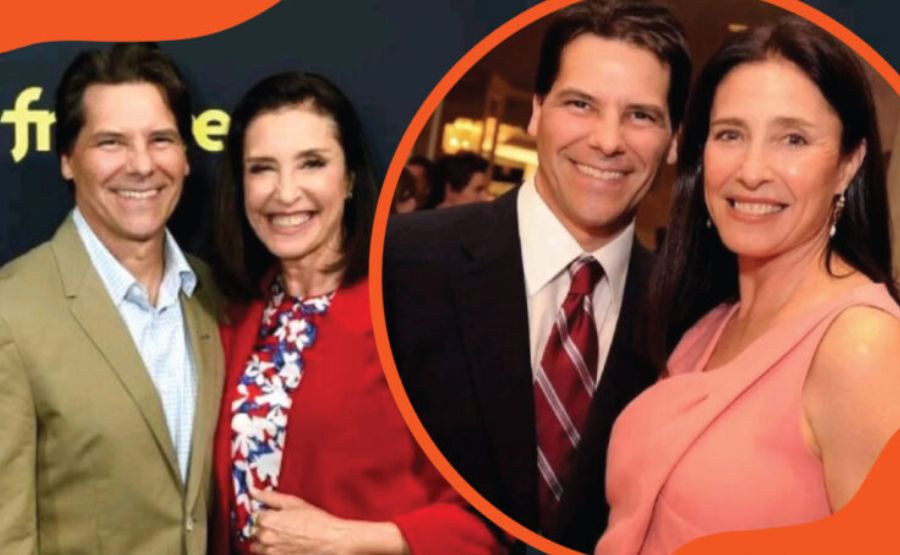
| Spouse | Mimi Rogers (married March 20, 2003) |
| Children | Lucy Julia Rogers-Ciaffa (b. Nov 20, 1995); Charlie Rogers-Ciaffa (b. July 30, 2001) |
| Known For | The Devil’s Arithmetic (1999), National Lampoon’s Christmas Vacation (1989), and Unstoppable (2010) |
| Estimated Net Worth | ~$5 million |
A Man Defined by What He Does, Not by Who Knows Him
Hollywood is filled with people desperate to be recognized. Chris Ciaffa is not one of them.
He has no Wikipedia page. He rarely gives interviews. His social media footprint is essentially nonexistent.
Yet the credits do not lie. From a low-level production assistant on a 1988 studio comedy to executive producer on a major 2010 Tony Scott action thriller, Ciaffa climbed steadily through one of the most competitive industries on earth — on the strength of competence alone.
See also “Mackenzie Ackles: The Woman Who Chose Texas Over the Spotlight“
Early Life: A Private Foundation
Very little about Chris Ciaffa’s childhood has ever reached the public record. He has not spoken about his parents, his hometown within the United States, or his education. No verified accounts of his early years appear in any credible source.
What is clear is that he entered the film industry while still in his twenties. His surname carries Italian roots, though Ciaffa himself has never made any public comment about his heritage or background.
The absence of a documented early life is not suspicious — it is deliberate. Ciaffa has guarded his privacy so consistently, across so many decades, that it reads less like a strategy and more like a deeply held value.
Starting at the Bottom: Late 1980s Hollywood
In 1988, a young Christopher Ciaffa — still using his full first name in credits — worked as a production associate on Big Business, a Touchstone Pictures comedy starring Bette Midler and Lily Tomlin. It was not a glamorous assignment. Production associates handle logistics, support senior crew members, and keep the machine running invisibly.
A year later, in 1989, he served as a production aide on National Lampoon’s Christmas Vacation, the holiday comedy that has since become a permanent fixture in American pop culture. His credit was minor. His contribution, however, was part of a production that still airs on television every December.
That willingness to begin at the bottom and earn each step upward would define the entire arc of his career.
The 1990s: Building Craft as an Assistant Director
By 1991, Ciaffa had moved into the role of key production assistant on Fourth Story, a made-for-cable thriller directed by Ivan Passer. That production would change his professional life — and his personal one.
In 1992, he served as second assistant director on two genre films produced by Full Moon Entertainment: Doctor Mordrid and Trancers III: Deth Lives. Neither film was a prestige project. Both were exactly the kind of assignment that teaches a working filmmaker how to function under pressure with limited resources.
The second assistant director role is demanding and rarely celebrated. It requires managing crew call sheets, tracking daily schedules, coordinating with department heads, and solving problems before the director ever knows they existed.
Ciaffa did this work without complaint, and without seeking shortcuts.
The Producing Years: Serious Films with Real Stakes
The late 1990s marked a turning point. Ciaffa shifted from assistant director work into executive producing — a transition that required not just organizational skill but creative and financial judgment.
In 1999, he served as executive producer on The Devil’s Arithmetic, a television film adapted from Jane Yolen’s novel about the Holocaust, starring Kirsten Dunst and Brittany Murphy. The film earned strong reviews and a Daytime Emmy nomination for Outstanding Children’s Special. It was substantive, difficult material — not the kind of project a producer takes purely for commercial gain.
A year later, in 2000, he executive-produced Harlan County War, a historical drama about coal miners fighting for labor rights in Kentucky, featuring Holly Hunter in the lead role. The subject matter — working-class people fighting powerful institutions — was again far from lightweight.
In 2001 and 2002, he produced My Horrible Year! and Charms for the Easy Life, the latter a period drama starring Gena Rowlands. Each project reflected a producer with genuine taste and range.
Notably, Mimi Rogers served as a producer alongside him on several of these titles. The professional collaboration between husband and wife was consistent and productive across nearly a decade.
The Peak Credit: Unstoppable (2010)
The most commercially significant entry in Ciaffa’s filmography arrived in November 2010. Unstoppable, directed by the late Tony Scott and starring Denzel Washington and Chris Pine, was a full-scale studio action thriller released by 20th Century Fox.
Ciaffa received an executive producer credit on the film. Mimi Rogers received a producer credit. Together, they stood in the credits of one of the year’s most commercially successful releases — a film that earned over $167 million worldwide.
The film centers on a runaway freight train carrying hazardous chemicals and two railway workers racing to stop it before it derails in a populated Pennsylvania town. It is propulsive, technically precise, and grounded in a real 2001 incident.
An important clarification: IMDb credits list Ciaffa specifically as “executive producer,” while some sources online describe the role differently. The full cast and crew listing for Unstoppable confirms Mimi Rogers as “producer” and Chris Ciaffa as “executive producer” — a distinction that matters in Hollywood’s hierarchy.
Scott was one of the most commercially powerful directors of his generation, and working at that level was the culmination of Ciaffa’s two-decade ascent through the industry.
Complete Filmography at a Glance
| Year | Title | Role |
| 1988 | Big Business | Production Associate |
| 1989 | National Lampoon’s Christmas Vacation | Production Aide |
| 1991 | Fourth Story | Key Production Assistant |
| 1992 | Doctor Mordrid | Second Assistant Director |
| 1992 | Trancers III: Deth Lives | Second Assistant Director |
| 1999 | The Devil’s Arithmetic | Executive Producer |
| 2000 | Harlan County War | Executive Producer |
| 2001 | My Horrible Year! | Executive Producer |
| 2002 | Charms for the Easy Life | Executive Producer |
| 2010 | Unstoppable | Executive Producer |
The Meeting That Shaped Everything: Fourth Story, 1990
In April 1990, Chris Ciaffa walked onto the set of a made-for-cable film directed by Ivan Passer. Mimi Rogers was starring in it. He was working as a production assistant.
That meeting on the set of Fourth Story changed both of their lives.
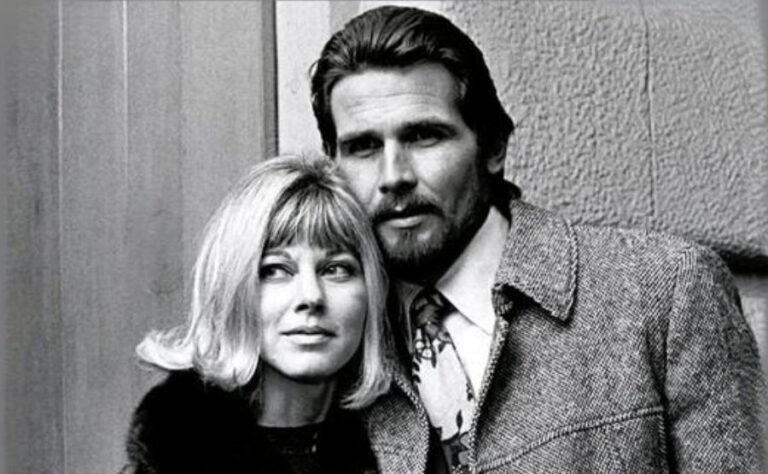
Rogers had just finalized her divorce from Tom Cruise in February 1990 — one of the most talked-about celebrity splits of that era. She was a well-established actress, seven years Ciaffa’s senior, navigating a period of significant personal transition. Ciaffa was a relatively unknown crew member in his mid-twenties.
The specifics of how their relationship developed have never been publicly discussed by either of them. What is documented is that by 1990 they were living together, and they remained together — unmarried, by Rogers’s own stated preference — for thirteen years.
A Thirteen-Year Relationship Before the Ring
Mimi Rogers has been candid in interviews about why it took so long to formalize the marriage. Having already been through two divorces — first from Jim Rogers in 1980 and then from Tom Cruise in 1990 — she was reluctant to risk unsettling a relationship that was clearly working.
She told Closer Weekly: “I think at the end of the day, you just got to be really, really good friends. And really be okay with one another as you are.”
That philosophy — friendship before formality — governed how Ciaffa and Rogers built their life together. They had their daughter Lucy in November 1995. They had their son Charlie in July 2001. They owned a home in Los Angeles. And they still had not married.
On March 20, 2003, at the Beverly Hills courthouse, they made it official. Quietly, without ceremony, in the same unsentimental way they had conducted their entire relationship.
The Shadow of Tom Cruise
Chris Ciaffa entered Mimi Rogers’s life immediately after the most famous marriage of her career ended. That sequencing is unavoidable.
Rogers and Tom Cruise married in May 1987. The union attracted enormous public attention — partly because Rogers was six years older, partly because Cruise’s stardom was exploding. Rogers is widely believed to have introduced Cruise to Scientology, a faith she had grown up in through her father’s deep involvement in the church. Her first husband, Jim Rogers, had also been a Scientologist.
The marriage ended in early 1990. Rogers later made a much-discussed statement in a Playboy interview suggesting Cruise had considered becoming a monk and embraced celibacy. She later said those remarks were taken out of context.
Where does Chris Ciaffa fit in all this? He entered precisely at the moment the tabloid spotlight was at its brightest. He chose — consistently, over three decades — to stay entirely outside it. He never commented on Rogers’s previous marriages. He never used proximity to her fame for professional advantage.
That restraint is either admirable discipline or complete indifference to public attention. Possibly both.
Children: Lucy and Charlie
On November 20, 1995, Lucy Julia Rogers-Ciaffa was born. She grew up, tried her hand at acting and directing, and ultimately found her professional footing at Amazon Studios, where she works in the comedy series development department.
Mimi Rogers, speaking at a Bosch: Legacy event, joked warmly about her daughter: “My daughter happens to work for Amazon Studios. She is employed in the department of comedic series. I always make a big joke about that at Bosch. In essence, we are all employed by my daughter. “
On July 30, 2001, Charlie Rogers-Ciaffa was born. He developed a passion for baseball and went on to play at Arizona State University. He has since built a career as a certified personal trainer and dietician.
Both children grew up largely shielded from media attention. Neither appears to have sought celebrity. The values their parents modeled — privacy, purposeful work, stability — seem to have taken root.
What Privacy Actually Costs
It would be easy to romanticize Ciaffa’s refusal of the spotlight. But there is a practical cost.
Because he has given no interviews, corrected no inaccuracies, and maintained no public presence, the biographical record about him is thin and sometimes contradictory. Various sources disagree on Lucy’s birth year (some say 1994, others say 1995 — the IMDb record says November 20, 1995). Some websites inflate his producing credit on Unstoppable without acknowledging the full producing team that surrounded him.
His estimated net worth, cited across various celebrity biography sites as somewhere between $1 million and $5 million, is entirely speculative. No verified financial disclosure exists. The real figure is unknown.
This is the bargain Ciaffa made. Total privacy, in exchange for total opacity. The world knows almost nothing about him — including some things that are simply true.
Professional Character: What the Work Reveals
When a person refuses to speak, their choices do the talking.
Ciaffa’s producing work across the 1990s and 2000s was not driven by commercial instinct alone. He attached his name to The Devil’s Arithmetic, a Holocaust drama aimed at younger audiences. He produced Harlan County War, a film about labor rights that most studios would consider unexciting territory. He worked on Charms for the Easy Life, a quiet period drama headlined by Gena Rowlands — not a blockbuster bet.
These choices suggest a producer who cares about what gets made, not just whether it earns. The Unstoppable credit confirms he could also operate at full studio scale when the project was right.
The combination — artistic credibility alongside commercial capability — is not as common as it sounds.
The Marriage in Practice: Two Careers, One Household
Hollywood marriages between two industry insiders often become competitive. The Ciaffa-Rogers partnership does not appear to have followed that pattern.
They produced multiple projects together under the same executive producer banner. They attended industry events as a unit — including the Unstoppable world premiere at the Regency Village Theater in Westwood, where they walked the red carpet with their daughter Lucy in 2010.
Rogers has spoken about her husband with warmth but not with the performative effusiveness of publicity. Her Closer Weekly comments framed the marriage in practical, grounded terms: friendship, mutual respect, being “okay with one another as you are.”
That description fits the evidence. This is not a celebrity marriage built for the press. It is a working partnership between two adults who built something real together over thirty-five years.
A Career Without Awards, Without Controversy
Ciaffa has not won major industry awards. He has not been involved in any documented professional controversy. He has not produced a film that became culturally transformative.
What he has done is show up, across four decades, and do the job correctly. He contributed to productions that employed hundreds of people. He co-produced films that told stories worth telling. He executive-produced a major studio release that earned widespread praise and significant box office returns.
In a field that produces enormous egos and spectacular public failures, Ciaffa’s record is one of quiet, consistent competence. That is not a small thing.
The Silence Question: Admirable or Limiting?
There is a version of Chris Ciaffa’s story in which his privacy is pure integrity — a man who simply does the work and lets it speak.
There is another version in which that same privacy has allowed his name to become primarily associated with his wife’s marriage history, rather than his own professional identity. Dozens of websites lead with “Mimi Rogers’s husband” before ever getting to what he has actually produced.
That framing is partly a media reality Ciaffa cannot control. But it is also partly a consequence of leaving the narrative entirely to others.
The two versions are not mutually exclusive. Both are probably true.
Where Chris Ciaffa Stands in 2026
Chris Ciaffa is 63 years old. He lives in Los Angeles. His last confirmed major producing credit dates to 2010. Whether he is working on current projects that have not yet been publicly announced, or whether Unstoppable represents the practical end of his active producing career, is not known.
His daughter holds a senior role at Amazon Studios. His son has built a career in fitness and health. His wife continues to act, most recently in Bosch: Legacy on Amazon Prime Video, the streaming successor to the acclaimed crime drama Bosch.
What Ciaffa does next — if anything — he will almost certainly do without announcing it.
Final Words
Chris Ciaffa built a growing Hollywood career without chasing fame. From small production roles in the 1980s to govt producer credit on projects like Unstoppable, he has earned acclaim through his daily paintings, not publicity.
His enduring collaboration with Mimi Rogers demonstrates the same underground technique: nonpublic, arbitrary and built on mutual admiration. In a business driven by attention, Ciaffa’s story stands proud because he was never interested in highlights, only within the piece.
FAQs
1. What is Chris Ciaffa best known for professionally?
His executive producer credit on Unstoppable (2010), directed by Tony Scott and starring Denzel Washington and Chris Pine, is his highest-profile career achievement. He is also known for producing The Devil’s Arithmetic (1999) and Harlan County War (2000).
2. How did Chris Ciaffa and Mimi Rogers meet?
They met in April 1990 on the set of Fourth Story, a made-for-cable thriller directed by Ivan Passer. Ciaffa was working as a key production assistant; Rogers was starring in the film.
3. When did Chris Ciaffa and Mimi Rogers get married?
They married on March 20, 2003, at the Beverly Hills courthouse, after living together since 1990 — a thirteen-year relationship before formalizing it.
4. Why did they wait so long to get married?
Rogers has said publicly that having been through two previous divorces, she was reluctant to risk the relationship. She preferred to build on a foundation of genuine friendship before making it legal.
5. How many children do Chris Ciaffa and Mimi Rogers have?
Two. Their daughter On November 20, 1995, Lucy Julia Rogers-Ciaffa was born. Their son Charlie Rogers-Ciaffa was born on July 30, 2001.
6. What do their children do today?
Lucy works at Amazon Studios in comedy series development. Charlie pursued baseball at Arizona State University and now works as a certified personal trainer and dietician.
7. Was Chris Ciaffa the executive producer or just a producer on Unstoppable?
The official IMDB cast and crew listing for Unstoppable credits Chris Ciaffa specifically as “executive producer.” Mimi Rogers is credited separately as “producer.” Some secondary sources blur this distinction.
8. Did Chris Ciaffa and Mimi Rogers produce films together?
Yes. They share credits on The Devil’s Arithmetic (1999), Harlan County War (2000), My Horrible Year! (2001), Charms for the Easy Life (2002), and Unstoppable (2010).
9. What is Chris Ciaffa’s estimated net worth?
Various celebrity biography sites estimate his net worth at approximately $5 million, accumulated through three decades as a producer and assistant director. No verified disclosure exists and any specific figure should be treated as an estimate only.
10. Does Chris Ciaffa have a Wikipedia page?
No. His biographical record lives primarily on IMDb, Turner Classic Movies, Rotten Tomatoes, and secondary celebrity biography websites.
11. Is Chris Ciaffa connected to Scientology?
There is no documented evidence linking Ciaffa to Scientology. His wife Mimi Rogers grew up in the church but has since left it. Her first husband Jim Rogers was a Scientology counselor. Tom Cruise, her second husband, remains one of its most prominent members. Chris Ciaffa has never made any public statement about religion or belief.
12. Has Chris Ciaffa worked on any projects after Unstoppable in 2010?
No confirmed producing credits appear in the public record after Unstoppable. Whether he is currently active in the industry in an unannounced capacity is not publicly known.
Keep creating moments of inspiration with Signature Magazine every day.