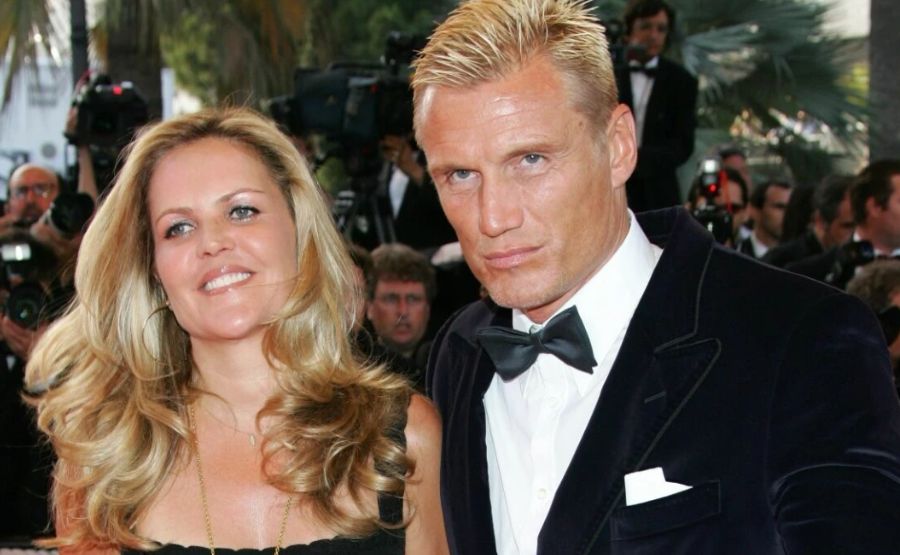
Anette Qviberg: The Designer Who Refused to Be Defined by Someone Else’s Fame
Anette Qviberg matters in 2026 because she built a genuine creative career while standing in one of Hollywood’s largest shadows — and then kept building after that shadow was gone.
She was married for seventeen years to Dolph Lundgren, one of the most recognizable action stars of the 1980s and 1990s. She raised two daughters largely alone in Marbella, Spain. She transitioned from jewelry design to fashion styling to interior design across three different continents without publicizing a single step.
The biographical interest in her runs well beyond the familiar “celebrity spouse” category. Her own roots, her professional journey, her business instincts, and her resilience through a genuinely frightening 2009 home invasion all tell a story that deserves its own space on the page.
Quick Bio
| Category | Detail |
| Full Name | Anette Qviberg |
| Date of Birth | Disputed: October 21, 1964 (some sources) or March 10, 1966 (other sources) |
| Birthplace | Disputed: Sweden (some sources) or Tarrant County, Texas, USA (other sources) |
| Nationality | Swedish-American |
| Ethnicity | White/European (Swedish heritage) |
| Mother | Kari Qviberg — artist; former designer to the Queen of Sweden |
| Stepfather | Staffan |
| Brother | Lole |
| Education | Degree in Fashion and Clothing Technology (Sweden) |
| Career | Jewelry designer, fashion stylist, interior designer; furniture design |
| Interior Design Company | Ida Ayu Design (Marbella) |
| @anetteqviberg (personal); @interiorbyanetteqviberg (design) | |
| Instagram Followers | ~18,000+ (combined) |
| Married | Dolph Lundgren — February 27, 1994, Marbella, Spain |
| Divorced | 2011 (17 years of marriage) |
| Children | Ida Sigrid Lundgren (b. April 29, 1996); Greta Eveline Lundgren (b. 2001) |
| Post-Divorce Relationship | Carlos (in a relationship since approximately 2013; not married) |
| Current Location | Marbella, Spain |
| Estimated Net Worth | $2 million–$5 million (unverified; multiple sources differ) |
| Ex-Husband’s Net Worth | Dolph Lundgren — estimated $18 million |
| Height | Approximately 5’7″ |
A Note on the Conflicting Facts
Before going further, the record on Anette Qviberg contains genuine contradictions that deserve acknowledgment.
Her birth date appears variously as October 21, 1964, and March 10, 1966, across different credible-seeming sources. Her birthplace appears as both Sweden and Tarrant County, Texas. The Issuu interview — which appears to quote her directly and is the closest thing available to a primary source — describes her as born and educated in Sweden, which aligns with the October 1964 claim. Texas is mentioned in other biographies without clear sourcing.
This article presents the conflicting information honestly rather than selecting one version and presenting it as fact.
See also “Cynthia Derderian: The Woman Who Knew Jean-Claude Van Damme Before the World Did“
The Creative Inheritance: A Mother Who Dressed a Queen
The most distinctive element of Anette Qviberg’s origin story is not the famous marriage. It is her mother.
Kari Qviberg was not simply an artist in the general sense. She designed for the Queen of Sweden, ran her own fashion lines, and sewed Anette’s own clothes by hand when Anette was a child. The creative inheritance was literal, not metaphorical.
Anette grew up inside the actual business of design — watching her mother translate aesthetic vision into finished garments, seeing how creativity connects to commerce, understanding from childhood that beautiful things require serious labor. Her grandmother added another layer. In published interviews, Anette has described her grandmother arriving in Sweden from Norway to escape the war, later becoming an LGBTQ community icon in her city, hosting Anette at the Cabaret on her 60th birthday, dressing in Yves Saint Laurent, and defying every category she was offered.
That is the lineage Anette came from. Not wealth or fame, but stylish, resilient, unconventional women who built their own identities. It shows in everything she eventually became.
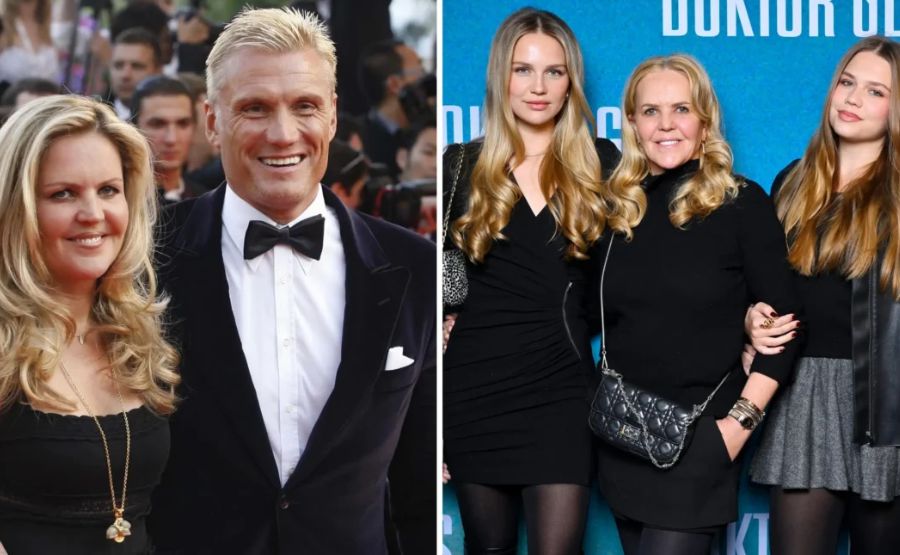
Stockholm to New York: The Eighteen-Year-Old Who Left
Anette left Sweden at eighteen years old.
She has described that departure with clarity in interviews — she knew her hometown could not contain what she wanted to do. She moved to New York City, which in the early 1980s was not the safest or easiest city for a young Scandinavian woman to build from scratch.
She spent fifteen years alternating between New York and Stockholm. The back-and-forth was not glamorous. It was the itinerant life of someone building professional credibility without the safety net of permanent residency. She was not a citizen. She did not have a Green Card.
She eventually won one — through the US immigration lottery, not through marriage or sponsorship. After fifteen years of legal uncertainty, the lottery gave her the right to stay. She described it as the moment she could finally plant roots.
She built those roots in Los Angeles after New York. She started her jewelry design business there. She continued her fashion styling work. Then — after meeting Dolph Lundgren — she moved those roots to Marbella, Spain. She has been there for over twenty years.
The Career She Built in Three Acts
Anette Qviberg’s professional career divides cleanly into three chapters, each requiring a different skill set and each earning its own reputation.
Act One: Jewelry Design and Fashion Styling
Her formal education was a degree in Fashion and Clothing Technology, taken in Sweden before her New York move. That credential gave her technical grounding — pattern-making, construction, the physical logic of clothing. When she arrived in New York, she began styling and designing jewelry, building a client base through talent and reliability rather than connections.
She described the experience of working in male-dominated creative industries with specific advice in one published interview: show up, be the underdog if you have to be, let others feel comfortable, do the important things asked of you, and wait for the moment when your voice earns its hearing. This is not the philosophy of someone who found everything easy. It is the philosophy of someone who found it hard and kept going anyway.
Her jewelry line attracted attention. Celebrity endorsements came. Her work moved from purely local reputation into a broader creative conversation.
Act Two: Los Angeles and the Business of Style
After securing her Green Card, Anette settled in Los Angeles. She expanded her jewelry business there and continued fashion styling work. Los Angeles in the 1990s offered a specific kind of opportunity for someone with her profile — proximity to the entertainment industry’s wardrobe needs, to the kind of wealthy private clientele who paid well for considered style advice.
She met Dolph Lundgren in Marbella, Spain, in the early 1990s. The relationship developed and the trajectory changed again — not because she stopped working, but because geography shifted everything.
Act Three: Interior Design in Marbella
Marbella became the final pivot point.
When Anette chose it as the place to raise her daughters — deliberately, thoughtfully, because she wanted them to grow up around nature and community rather than in the concrete acceleration of New York or Los Angeles — she converted her design instincts to a new medium.
She founded Ida Ayu Design, an interior design practice operating out of Marbella. The work covers private homes, apartments, and restaurants. She has described the process with precision in published interviews: every project has its own psychology. You need to understand the client’s wants and desires at a level that goes beyond aesthetics.Everything must come together. That is not decorating. That is a form of listening translated into space.
She maintains two Instagram accounts — one personal, one dedicated entirely to her design work. The design account documents projects with the quiet confidence of someone who does not need to announce achievement, only show it.
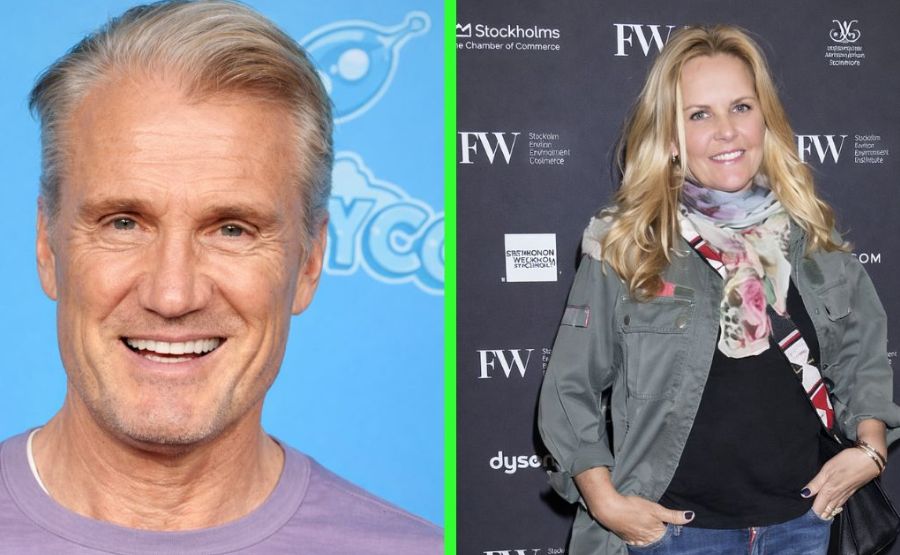
February 27, 1994: The Wedding That Linked Two Lives
Anette and Dolph Lundgren married on February 27, 1994, in Marbella, Spain.
The wedding had a celebrity guest list that reflected Dolph’s world: Sylvester Stallone, Arnold Schwarzenegger, and Jean-Claude Van Damme were reportedly present. That detail is worth sitting with for a moment — because it shows exactly the cultural universe Anette was marrying into, and exactly the universe she subsequently chose to remain outside of.
They settled in Marbella. They also maintained homes in Los Angeles, Stockholm, and London at various points — the multi-residence pattern of a family living between Hollywood’s demands and a parent’s desire for her children to have a real life. Anette explicitly chose Marbella for her daughters. She has said so directly. She wanted them near nature, in a genuine community, away from the industry’s compulsive performance of itself.
Their first daughter, Ida Sigrid Lundgren, was born on April 29, 1996. Their second daughter, Greta Eveline Lundgren, arrived in 2001. Seventeen years of marriage. Two daughters. One villa in Marbella that would eventually be broken into by people who almost certainly underestimated who was home.
May 2009: The Night the Burglars Recognized the Photographs
In May 2009, masked intruders broke into the Lundgren family’s Marbella villa.
Dolph was not home. At the time, he was filming The Expendables. Anette was there with their daughters. The intrusion was not a quiet theft. Sources with access to Dolph’s own account indicate the burglars were armed and threatening. They entered, they began taking things, and then something unexpected happened.
They saw Dolph Lundgren’s face in the framed photographs around the house. They stopped. They recognized him. They returned several of the items they had taken, and they left.
The story carries a note of dark absurdity — criminals deterred by a movie star’s photograph. But Anette was alone in that house with her daughters, and there was nothing absurd about what that experience felt like from inside it. The incident left lasting psychological effects. The family relocated temporarily to Los Angeles for safety and therapy. Ida, the elder daughter, was reportedly particularly affected.
Dolph gave a public interview about the event in 2010. Anette, characteristically, said nothing publicly. That discipline — to remain silent about her own terrifying experience while her husband spoke for the family — is either admirable restraint or a revealing asymmetry in how their marriage operated. Perhaps both.
2011: The Divorce That Produced No Scandal
Anette and Dolph Lundgren announced their separation in 2011, citing irreconcilable differences after seventeen years of marriage.
There was no public fight. There were no accusations in press releases. There was no tabloid war. The separation produced the least drama possible for the dissolution of a marriage involving one of the world’s more recognizable action stars.
The reasons were kept private. The most plausible reconstruction from available information: seventeen years of Dolph’s filming schedule, his extended absences, and the cumulative weight of a marriage where one person was globally recognizable and the other had deliberately made herself invisible, eventually produced the distance that formalized into separation.
Dolph’s net worth at the time of the divorce was estimated at $18 million. Anette received a settlement, the specifics of which were never disclosed. She retained primary residence in Marbella with the daughters.
What happened next is the most telling part of this story. They remained friends. They co-parented effectively. They were photographed together at family occasions in subsequent years. Two people who had built something real together, who disagreed about enough to end their marriage, and who agreed that their daughters’ stability mattered more than either party’s grievance.
The Daughters: What Anette Built Next
Ida Sigrid Lundgren, now in her late twenties, has built a career as a model and actress — working with agencies including Wilhelmina and Trend, and appearing in films including Castle Falls alongside her father and Command Performance. She is a martial artist and fitness advocate with over 100,000 Instagram followers.
Greta Eveline Lundgren, born in 2001, has pursued photography and fashion content creation, maintaining an Instagram presence with nearly 60,000 followers and a YouTube channel documenting her life, style, and travels. She reportedly worked behind the scenes on her father’s film Wanted Man.
Both daughters carry their mother’s creative sensibility alongside their father’s industry connections. Anette has been visibly proud of them without making that pride performative. She appears in their content occasionally, travels with them, and maintains the close relationship that Marbella’s relative quietness allowed her to build.
In a published interview, Anette spoke directly about the challenge her daughter Ida faces — the assumption that her career is a product of her parents’ names rather than her own talent. Anette’s advice was pointed: work from the bottom up or you will never be confident. That is not advice she borrowed from a parenting book. That is what she lived across fifteen years of building her own career without a famous last name.
Life After the Marriage: Carlos, Instagram, and Interior Design
Since approximately 2013, Anette has been in a relationship with a man named Carlos. He has appeared in her personal Instagram posts across several years. She has not named his surname publicly, has not given interviews about the relationship, and has not publicized it beyond the occasional shared photograph.
She operates two Instagram accounts with a combined following of over 18,000. The personal account documents her life in Marbella — home moments, travel photographs, family connection. The design account documents her professional work with the restraint of a designer who believes the work should speak directly.
Her net worth is estimated at $2 million to $5 million across various sources, with no verified figure available. The range reflects legitimate uncertainty: she works with private clients, does not publicize projects or fees, and has never disclosed income. The lower estimate reflects a conservative reading of an interior design practice operating in Marbella’s luxury market. The higher estimate factors in the divorce settlement and twenty-plus years of professional income accumulation.
What is certain is that she did not stop working when the marriage ended, and she did not start publicizing herself when it became a potential narrative asset.
The Woman Behind the Work: What the Interviews Reveal
The most revealing material about Anette Qviberg comes from the published Euro Weekly News interview, which appears in the Issuu archive and contains extended direct quotes from her.
She described the advice she received from her stepfather and grandmother as the most important she ever got: live in the moment, make the situation as good as possible, and “It’s never going to work” is something you should never say. She internalized that. It shows in the career trajectory she chose — three distinct professional disciplines, three different cities, one consistent refusal to accept limitation as final.
She described her advice to women in business: don’t stop. If you have something you believe in, it is worth the difficulty. Luck plays a role — she acknowledged that directly, without pretending pure meritocracy. But creativity sustained over time eventually finds its hearing.
She described raising her daughters in Marbella as a deliberate choice rooted in community — the sense that in that city, with its mixture of nationalities and cultures, she could create the kind of social environment her children needed that Hollywood or New York would not have provided.
None of these statements have the quality of someone managing their image. They have the quality of someone who knows what they actually think.
Final Words
Anette Qviberg came from a lineage of women who did not fit categories. Her grandmother wore Yves Saint Laurent, defied social convention, and became an icon. Her mother dressed royalty. Anette herself moved to New York alone at eighteen, built a design career across three disciplines and two continents, raised two daughters in a Spanish coastal city she chose for their sake rather than her own convenience, survived a frightening home invasion with silence, and ended a seventeen-year marriage without a single public grievance.
She has been estimated at $2 million to $5 million in net worth — figures that represent decades of sustained professional work, not lottery winnings or passive income from a famous surname.
She maintains her design practice in Marbella. She posts selectively on Instagram. She is in a private relationship with a man named Carlos. Her daughters are building their own careers with her visible support and her active effort to ensure they know that a name is not a shortcut.
The world knows Anette Qviberg primarily as Dolph Lundgren’s ex-wife. The more accurate summary is simpler: she is a designer who happened to marry a movie star, built her own career anyway, and is still building it.
FAQs
1. Who is Anette Qviberg?
She is a Swedish-American designer who has worked across jewelry design, fashion styling, and interior design throughout a career spanning more than three decades. She is best known publicly as the former wife of actor Dolph Lundgren, though she built a professional identity independent of that association.
2. When was Anette Qviberg born and where?
Her birth information is genuinely disputed across sources. Some cite October 21, 1964, in Sweden. Others state March 10, 1966, in Tarrant County, Texas. A published interview in the Euro Weekly News describes her as born and educated in Sweden, which supports the Swedish birth claim. No definitive documentation is publicly available.
3. What is Anette Qviberg’s net worth?
Estimates range from $2 million to $5 million across different sources, none of which have verified documentation. Her income derives from interior design work for private clients, earlier jewelry design and fashion styling income, and a divorce settlement from Dolph Lundgren, whose net worth at the time was estimated at $18 million.
4. Who was Anette’s mother and why does that matter?
Her mother, Kari Qviberg, was a designer who created fashion for the Queen of Sweden and ran her own clothing lines. She made Anette’s childhood clothes by hand. This creative environment was foundational — Anette did not arrive at design as a hobby. She grew up inside it as a professional and cultural reality.
5. When and where did Anette and Dolph Lundgren marry?
They married on February 27, 1994, in Marbella, Spain. The wedding was attended by celebrities including Sylvester Stallone, Arnold Schwarzenegger, and Jean-Claude Van Damme — reflecting Dolph’s industry world, which Anette largely chose not to inhabit.
6. How many children do they have?
Two daughters. Ida Sigrid Lundgren, born April 29, 1996, is now a model and actress who has appeared in Castle Falls and Command Performance and works with major modeling agencies. Greta Eveline Lundgren, born in 2001, is a content creator and photography enthusiast with a significant social media following.
7. What happened at the Marbella burglary in 2009?
In May 2009, masked intruders broke into the Lundgren family villa in Marbella while Dolph was away filming The Expendables. Anette and her daughters were home. The burglars recognized Dolph from photographs inside the house and left, returning some stolen items before fleeing. The family temporarily relocated to Los Angeles for safety and therapy following the incident.
8. Why did Anette and Dolph divorce in 2011?
They cited irreconcilable differences. The specific reasons were never publicly disclosed. Available evidence suggests the pressures of Dolph’s prolonged filming absences and the structural imbalance of a marriage between a global celebrity and a deliberately private person contributed. They separated without public drama and maintained a friendly co-parenting relationship afterward.
9. What is Ida Ayu Design?
It is Anette’s Marbella, Spain-based interior design firm. The firm takes on private residential projects, apartments, and restaurants. Anette has described her approach as psychological — she works to understand what clients genuinely want, not just what they think they want, and builds interior environments around that understanding.
10. How did Anette Qviberg obtain US residency?
After fifteen years of alternating between New York and Stockholm on temporary visa arrangements, she won a US Green Card through the immigration lottery. She subsequently settled in Los Angeles, where she established her jewelry design business before eventually relocating to Marbella.
11. Is Anette Qviberg remarried?
No. She has been in a relationship with a man named Carlos since approximately 2013, based on his appearance in her personal Instagram posts. She has not publicly disclosed his surname or any details about the relationship beyond the photographs she has chosen to share.
12. What advice has Anette Qviberg given publicly about careers?
In a Euro Weekly News interview, she advised: don’t stop your creativity if you believe in it; be proud of your own style rather than copying others; work from the bottom up because confidence only comes from building something yourself; and acknowledge that luck plays a role without letting that acknowledgment become an excuse.
13. What careers have Anette’s daughters pursued?
Ida has become a model and actress represented by major agencies and has appeared in films including Castle Falls alongside Dolph Lundgren. She is also a martial artist. Greta has developed a presence as a photographer, content creator, and fashion enthusiast with Instagram and YouTube followings. She reportedly worked behind the scenes on the film Wanted Man.
14. Why does Anette Qviberg attract ongoing public interest despite her private nature?
Several reasons intersect. Dolph Lundgren remains a recognized figure whose life continues to generate media attention. His daughters’ growing public profiles create ongoing biographical context that includes their mother. And Anette’s own refusal to seek attention — in a media environment where celebrity-adjacent status is routinely monetized — creates a genuine curiosity about someone who could be visible and isn’t.
Keep creating moments of inspiration with Signature Magazine every day.