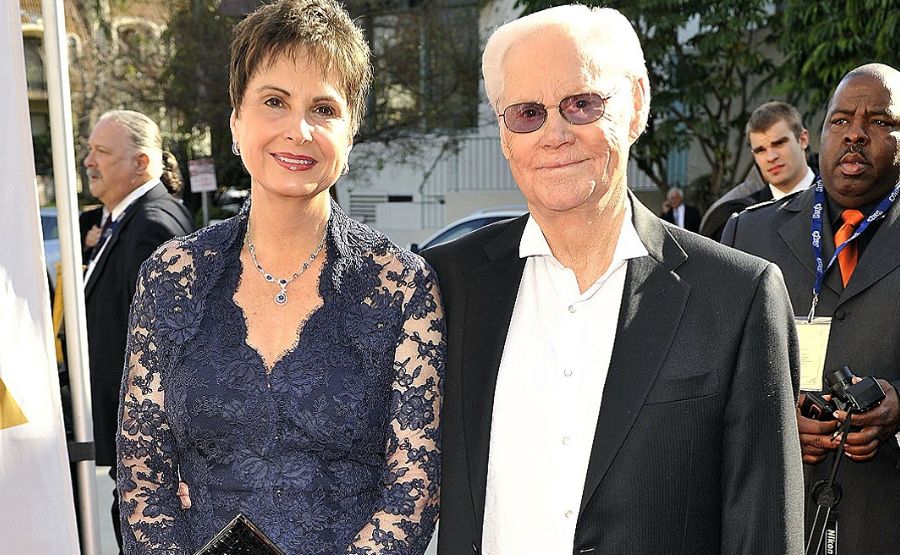
Nancy Sepulvado Singer: She Stayed When Everyone Else Had Given Up
The wedding reception was at Burger King.
Not a ballroom in Nashville. Not a catered event in a Texas ranch house. After the vows were exchanged at George Jones‘s sister’s home in Woodville, Texas on March 4, 1983, the bride and groom slid into a booth at a fast-food restaurant and called it a celebration. George Jones was one of the most famous voices in the history of American music. Nancy Sepulvado didn’t care about the glamour. She’d already decided she wasn’t marrying the legend. She was marrying the man — and the man was a mess.
That Burger King moment says everything about who she is. Practical. Unimpressed by the performance. In it for something real.
Quick Bio
| Detail | Information |
| Full Name | Nancy Sepulvado Jones |
| Born | April 6 (year disputed — sources cite 1953 or 1959); birthplace disputed — sources cite Mansfield, Louisiana or New York |
| Age (2026) | Approx. 66–72 (depending on birth year) |
| Raised | Louisiana, USA |
| Previous Marriage | One prior marriage (details private); two daughters from that union |
| Married George Jones | March 4, 1983, Woodville, Texas |
| Marriage Duration | 30 years (until George’s death, April 26, 2013) |
| Career Roles | George Jones’s personal manager; actress (minor roles); author |
| Book | Playin’ Possum: My Memories of George Jones (Sept. 12, 2023, co-authored with Ken Abraham) |
| Current Residence | Woodville, Texas |
| Children | Two daughters from previous marriage (one named Adina) |
| Net Worth | Not publicly confirmed; inherited substantial estate from George Jones |
Where She Came From: Louisiana, Before the Legend
Nancy Sepulvado grew up in Louisiana — a state that runs on music, memory, and the understanding that life is both harder and richer than it looks from the outside. Wikipedia’s article on George Jones identifies her as a divorcée from Mansfield, Louisiana, at the time of their meeting. Other sources list Shreveport. She’s never publicly settled the question, which is consistent with her broader approach to personal history: she shares what matters and keeps the rest.
What’s confirmed is that she was raised in the South, carried Southern values into everything she did, and had no connection to the country music industry before November 1981. She wasn’t chasing a singer. She wasn’t positioned near a famous man. She was living her own ordinary life — a previous marriage behind her, two daughters to raise, work to do.
Several sources indicate she worked in business administration or at a telephone company before meeting George. The Fashion Institute detail appears in some biographical articles, but that claim traces back to no verifiable primary source and this article treats it as unconfirmed. What’s beyond dispute is that she had practical, organizational skills that later saved an empire — wherever she acquired them.
She was a woman who’d already survived one marriage ending. She knew what walking away looked like. Which made her decision to stay, once she saw George, all the more deliberate.
See also “DeVon Minters: The Untold Life Behind a Famous Daughter“
The Turning Point: A Concert in New York, November 1981
She didn’t go looking for George Jones. She went to his concert in New York with a friend who was dating Jones’s tour manager. It was a blind date in the loosest sense — two people thrown into the same orbit by circumstance and someone else’s relationship.
She had no idea who he was. She’d never listened to country music the way his fans did. Then he walked onstage.
“My God, he walked on stage, and the crowd went wild,” she later told The Tennessean. “And that voice. I thought, ‘How is that coming out of that man’s mouth? Dang, he’s good.'” She was 34 years old, divorced, practical-minded, and not easily impressed. And she was floored.
George noticed her too. He wrote in his 1996 autobiography I Lived to Tell It All that no teenage boy ever fell harder for a girl than he fell for her that night. He wrote that he had no idea she would someday save his life. That line has been quoted so many times it risks losing its weight. The truth behind it is heavier than any quote: she didn’t just improve his life. She interrupted its trajectory toward a very different ending.
Career Rise: The Manager Nobody Hired
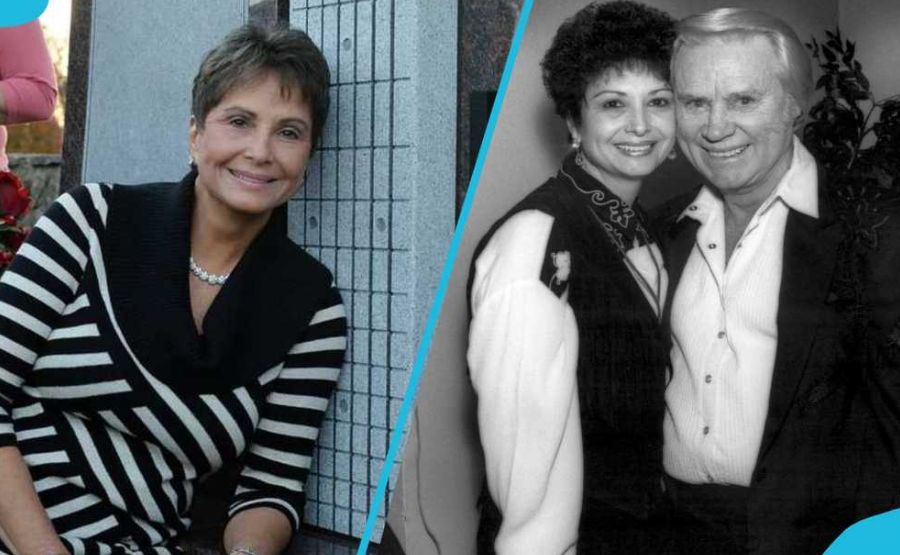
She married into chaos. George Jones in 1983 was drowning. His nickname — “No Show Jones” — had been earned honestly: in 1979 alone, he missed approximately 54 scheduled shows. His finances were destroyed by years of mismanagement, drug dealers, and the kind of entourage that profits from a legend’s dysfunction. His manager and lawyers had been feeding off the wreckage.
Nancy fired them. Immediately.
She took over his career management herself, with no formal training in the music business and no industry contacts. She found massive debts and financial chaos on the other side of the marriage certificate. She negotiated with creditors. She restructured contracts. She physically placed herself between George and the people who were killing him — including drug dealers who, according to Wikipedia, reportedly retaliated by kidnapping one of her daughters. She kept going anyway.
The early years were brutal by her own account. She told interviewers: “You can’t walk around and say I never got slapped, I never got hit. You know that’s a lie.” She didn’t say that to generate sympathy. She said it because she refuses to let the love story erase the reality of what that love cost.
George quit cocaine. Then he went on a drunken rampage in Alabama in fall 1983 and was committed to Hillcrest Psychiatric Hospital, straitjacketed, suffering from malnutrition and delusions. She didn’t leave. By March 1984, he performed his first sober show in Birmingham since the early 1970s. He walked out clean. She had made that possible through a combination of love, logistics, and iron will.
Her minor acting appearances — in the 2004 production Bollywood and Vine and the 2008 Alan Jackson video Good Time — are footnotes to a much larger career that never had a job title. She was the executive who kept the whole operation from collapsing.
Personal Life: The Weight of Thirty Years
They were together for thirty years and they were not thirty easy years. Nancy has never pretended otherwise.
The physical abuse she described in her 2023 memoir wasn’t a secret she revealed reluctantly — she disclosed it publicly because she decided the truth was more important than protecting a legacy from complexity. “As hard as it was to write this book, I did not sugarcoat it,” she said at her book release party. The George Jones that fans heard on the radio was also the George Jones who could be violent during addiction’s worst chapters. She lived both versions simultaneously.
She told The Tennessean that she understood her presence in George’s life as a calling: “God put me with him to help him get the devil out of him.” She didn’t frame that as martyrdom. She framed it as clarity — she knew what the assignment was, and she accepted it. Whether that’s interpreted as faith or stubbornness or both, the result was the same: she stayed.
The 1999 car crash changed everything in the direction they’d been working toward. On March 6, George drove drunk and nearly died — lacerated liver, severely bruised lung, a 13-day hospital stay. He called it a lasting deal with God. Nancy called it the moment things finally shifted. He achieved genuine sobriety after that. The next fourteen years of his career — the concerts he showed up for, the voice that held — were built on the foundation she’d been laying for nearly two decades.
George’s last words to her, which she described to The Tennessean, were the kind that make a person wonder whether he knew: “George said, ‘Well, hello there.’ He said, ‘I’ve been looking for you.’ He said, ‘My name’s George Jones.’ And he was gone.” He died April 26, 2013. He was 81.
She has two daughters from her previous marriage — one named Adina — and became stepmother to George’s four children from earlier relationships. The family structure was complicated in the way that blended families and country music dynasties tend to be, but Nancy showed up for it the way she showed up for everything: steadily.
Controversies: The Will, the Lawsuit, and the Museum
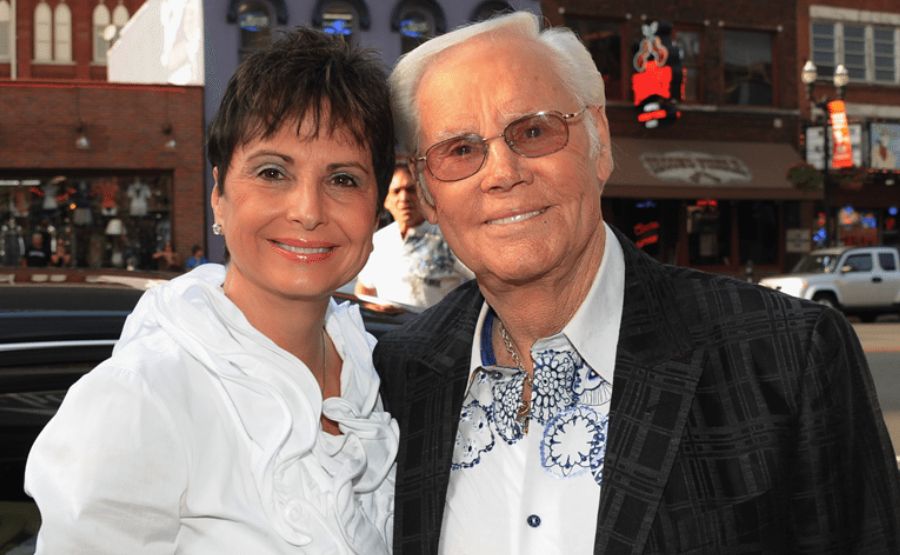
George Jones’s estate, valued at approximately $35 million at the time of his death, went primarily to Nancy. His daughter Georgette received $50,000. His daughter Susan was left out of the will initially and later filed a legal case, eventually reaching a $2 million settlement. His sons Bryan and Jeffrey received portions as well.
The distribution drew scrutiny and some public resentment from fans who felt George’s biological children deserved more. Nancy has not responded to those criticisms in any documented public statement — consistent with her pattern of addressing what she chooses to address and leaving the rest alone.
The George Jones Museum in Nashville, which Nancy helped establish to honor his legacy, faced its own difficulties. The COVID-19 pandemic gutted its visitor traffic, and a December 2020 bombing in downtown Nashville damaged the area significantly. The museum eventually closed. Its closure disappointed fans who had gathered there to feel close to something.
Nancy has also faced false death rumors online — obituaries and reports circulating for other women named Nancy Sepulvado. She is alive. Her family has had to correct these reports more than once, which speaks to the particular cruelty of the internet toward private people connected to famous names.
Her daughter Adina’s serious lawnmower accident in September 2023 — which destroyed her heel bone, requiring multiple surgeries and a wound vac — prompted Nancy to post updates on George’s official Facebook page, asking fans for prayers. The visibility of that grief — a mother sharing her daughter’s medical crisis with strangers who follow her dead husband’s account — captures something honest about the life Nancy occupies. She didn’t build a public identity for herself. She inherited one through grief and has used it carefully.
Current Life: Woodville, Texas, and a Near-Death that Became a Book
In 2021, Nancy Sepulvado nearly died.
COVID-19 put her in the hospital for four months. At one point, she had absolutely no pulse for ten minutes. She described seeing “the prettiest light I had ever seen in my life.” She recovered, but the recovery was brutal — she lost her hair, lost 70 percent of her lung capacity, and got down to 92 pounds. By the time she came back, she had decided she wasn’t finished saying things that needed saying.
That near-death experience drove her to write Playin’ Possum: My Memories of George Jones, co-authored with Ken Abraham and published September 12, 2023 — on what would have been George’s birthday. The book is 303 pages, not a tribute album. It contains scenes of abuse scenes. It contains her testimony as a Christian. It contains humor and grief and the kind of detail that only someone who actually lived it could have included.
She wrote: “I’m here to lead as many people as I can to Jesus Christ, and I won’t stop.” That’s not a closing line — it’s a mission statement for the third chapter of a life that keeps refusing to end quietly.
As of 2026, she lives in Woodville, Texas. She manages George Jones’s official social media accounts. She doesn’t chase headlines. She doesn’t attend major events regularly. She had surgery on her left eye in 2017 after losing vision, survived COVID-19 in 2021, and published a memoir in 2023. She’s still here. Still fighting for his memory the way she once fought for his sobriety.
Legacy: What Thirty Years Actually Looks Like
The country music world knows George Jones as the man who recorded “He Stopped Loving Her Today” — voted the greatest country song ever made by multiple polls. It knows him as the Possum, as No Show Jones, as the voice Frank Sinatra once called the second-greatest singer in America. What it knows less clearly is what made the final decades of that career possible.
Nancy Sepulvado didn’t write songs. She didn’t perform. She didn’t appear on album covers. She fired a manager, negotiated with creditors, stayed through beatings, locked out drug dealers, held a man’s life together with organizational skill and theological conviction, and wrote a book at 70 years old because she survived a death long enough to feel she owed people the truth.
She turned “No Show Jones” into “Show Up Jones.” Not with one dramatic gesture but with thirty years of Tuesday mornings.
That’s what a legacy built in private looks like. It doesn’t announce itself. It shows up in the fact that a man who missed 54 concerts in a single year eventually recorded some of the most beloved country music of the 1990s. It shows up in a voice that keeps singing. It shows up in a Burger King wedding that lasted thirty years.
Some people save lives loudly. Nancy Sepulvado did it quietly, then finally wrote it down so the world would know what it actually cost.
Conclusion
Nancy Sepulvado’s story is much bigger than remembering her as the spouse of George Jones. Her life with him shows the pressures of loyalty, resilience and practical courage behind one of country song’s every great comeback story, while George Jones legend audiences celebrated, Nancy often turned to the ever convenient life and career that made the last long ones possible.
She no longer just stood next to a wounded statue, she handled crises, faced shelter, protected a legacy and held on through the years when many others were pushed away and her position was no longer rhetorical. made into infrastructure. From saving George’s career to later keeping him remembered through her memoirs and his estate, her influence goes far beyond the boundaries of his career.
Nancy Sepulvado’s legacy in Quiet isn’t always the best, as she loved the legend. It’s just that she helped save one. Her story is a reminder that some of the most influential figures in history do not keep constant steps, yet they quietly ensure that the track never stops.
FAQs
1. Who is Nancy Sepulvado?
She is the fourth and final wife of country music legend George Jones. A Louisiana-raised businesswoman and manager, she married Jones on March 4, 1983, and is credited by Jones himself with saving his life from addiction.
2. When was Nancy Sepulvado born?
Her birth date is genuinely disputed across sources. April 6 appears consistently, but the year ranges from 1953 to 1959. Her exact birth year hasn’t been confirmed by a reliable primary source. She would be approximately 66–72 in 2026.
3. Where is Nancy Sepulvado from?
Wikipedia’s George Jones article identifies her as from Mansfield, Louisiana. Other sources cite Shreveport, Louisiana, and some claim New York. She has not publicly clarified this.
4. How did Nancy Sepulvado meet George Jones?
At his concert in New York in November 1981 — a blind date arranged through her friend who dated Jones’s tour manager. She had no prior knowledge of his music.
5. When did Nancy Sepulvado and George Jones get married?
March 4, 1983, at Jones’s sister Helen Scroggins’ Woodville, Texas, residence. Their post-ceremony dinner was at Burger King.
6. Did Nancy Sepulvado abuse George Jones?
The documented history runs the other way — Nancy disclosed in her 2023 memoir Playin’ Possum that she experienced physical abuse from George during his addiction years. She did not sugarcoat it.
7. How did Nancy Sepulvado help George Jones get sober?
She fired his manager and lawyers immediately after marriage, restructured his finances, cut off access to his drug dealers, and stayed present through multiple relapses. The 1999 drunk-driving accident involving a near-fatal crash was the final turning point toward lasting sobriety.
8. Did Nancy Sepulvado’s daughter get kidnapped?
Wikipedia’s article on George Jones states that drug dealers reportedly kidnapped Nancy’s daughter in retaliation for her cutting off their access to George. This detail appears in the Wikipedia entry, which sources the biography George Jones: The Life and Times of a Honky Tonk Legend.
9. When did George Jones die?
April 26, 2013, in Nashville, Tennessee, from hypoxic respiratory failure. He was 81.
10. What did George Jones say about Nancy Sepulvado?
In his 1996 autobiography, he wrote that he fell harder for her than any teenage boy ever fell for a girl, and that she saved his life when friends, family, doctors, therapists, and ministers had all failed.
11. What is Nancy Sepulvado’s book about?
Playin’ Possum: My Memories of George Jones, published September 12, 2023, and co-authored with Ken Abraham. It covers their 30-year marriage honestly — including abuse, addiction, faith, and love.
12. What prompted Nancy to write her memoir?
A near-fatal COVID-19 episode in 2021 — she was hospitalized for four months, had no pulse for ten minutes, lost her hair and 70 percent of her lung capacity, and dropped to 92 pounds. She described seeing a brilliant light during the experience and returned with a sense of purpose.
13. Is Nancy Sepulvado still alive in 2026?
Yes. Despite false online obituaries circulating for other women with the same name, Nancy Sepulvado Jones is alive and living in Woodville, Texas.
14. What did Nancy Sepulvado inherit from George Jones?
She was the primary beneficiary of his estate, estimated at approximately $35 million. She received their home in Franklin, Tennessee, properties in Brentwood and Nashville, vehicles, jewelry, instruments, and control of his intellectual property including music rights, name, and image.
15. What did George Jones say to Nancy in his final moments?
As she recounted to The Tennessean: “George said, ‘Well, hello there.’ He said, ‘I’ve been looking for you.’ He said, ‘My name’s George Jones.’ And he was gone.”
Keep creating moments of inspiration with Signature Magazine every day.