Kerri Browitt Caviezel: The Woman Who Chose Purpose Over Fame
Quick Bio
| Detail | Information |
| Full Name | Kerri Browitt Caviezel |
| Date of Birth | September 26, 1968 |
| Birthplace | Mount Vernon, Washington, USA |
| Ancestry | Croatian and Italian |
| High School | Cle Elum-Roslyn High School, Washington |
| University | Western Washington University (graduated 1990) |
| Degree | English |
| College Sport | Basketball — WWU Vikings Women’s Team |
| Height | 5 feet 9 inches (1.75 m) |
| High School Basketball | First-team All-State, Class 1A; led team to state championship 1985; tournament MVP |
| College Records (still standing) | 2nd all-time assists (535), 5th steals (233), among top 25 in rebounds and points |
| Academic Honor | NAIA National Scholar-Athlete; President’s List — 9 times |
| Hall of Fame | The WWU Athletics Hall of Fame was established on February 28, 2015. |
| Profession | High School English Teacher (30+ years, Seattle area) |
| Married | July 20, 1996 |
| Spouse | Jim Caviezel (actor; The Passion of the Christ, Person of Interest) |
| Children | Three — Bo, Lyn Elizabeth, and David (all adopted from China) |
| Pro-Life Service | Pregnancy Counseling Center, Mission Hills, California — 17 years |
| Faith | Devout Roman Catholic |
| Social Media | None — deliberately |
| Estimated Net Worth | $500,000–$1 million (personal) |
The Person the Headlines Miss
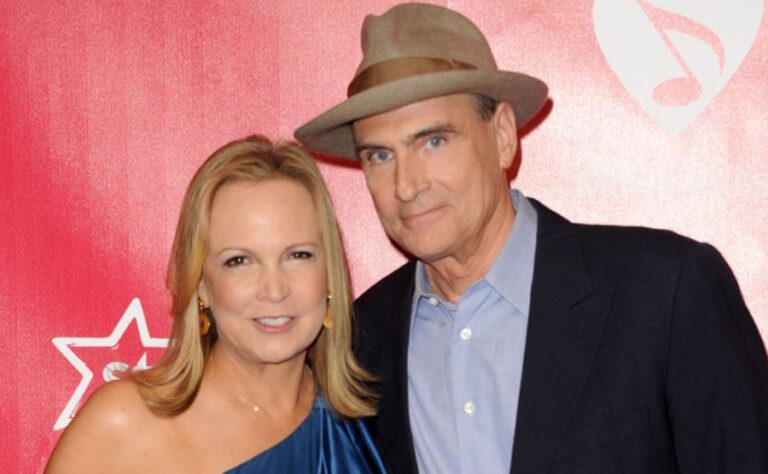
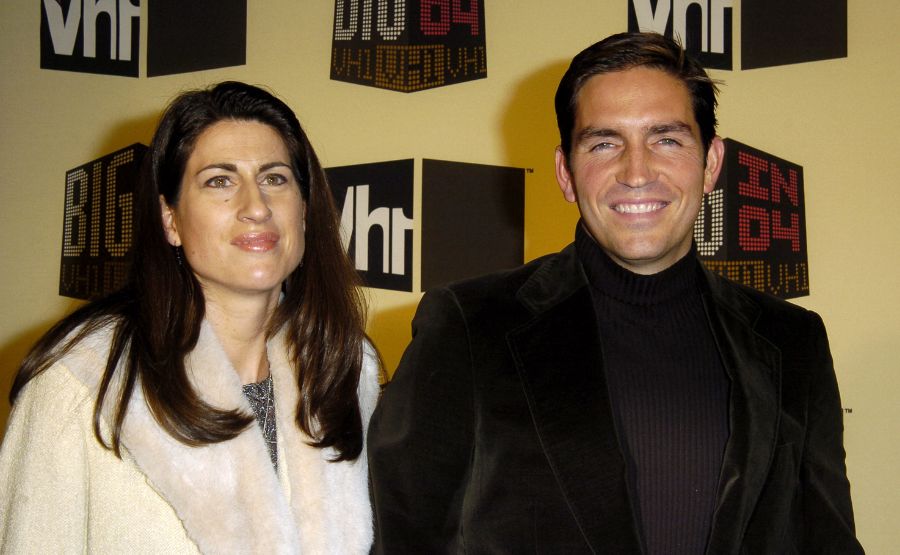
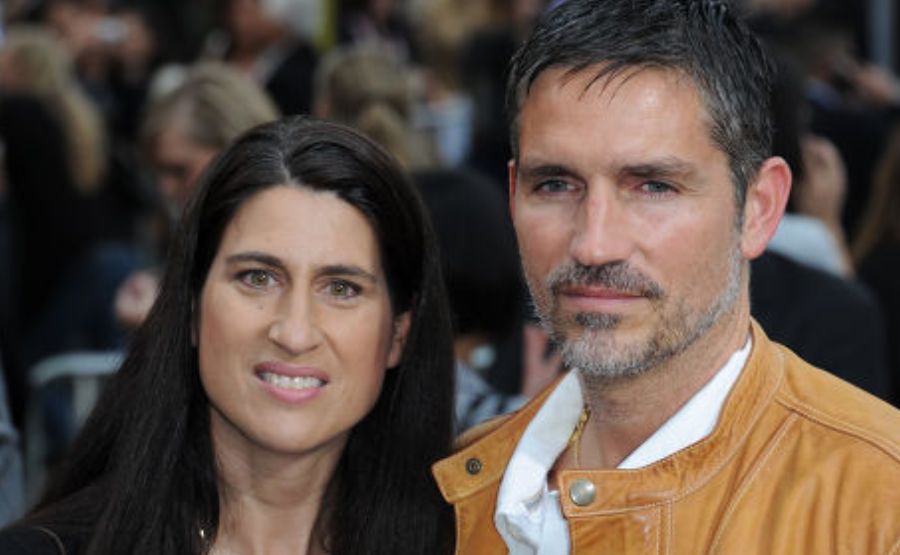
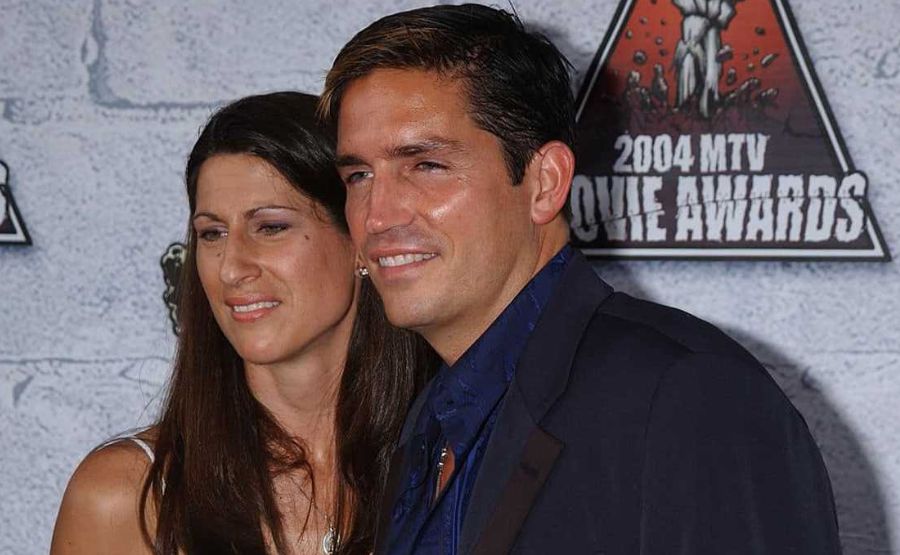
Most people encounter her name in a caption. “Jim Caviezel and wife Kerri at the premiere.” She is standing slightly to the side. Smiling warmly. That photo tells you almost nothing about who she actually is.
Before she ever met Jim Caviezel, Kerri Browitt had already built something worth admiring. She was an award-winning athlete, a decorated scholar, and a young woman who could have chased professional basketball but instead chose a classroom. That sequence matters. Her identity was formed long before Hollywood came anywhere near her life.
She is, by most honest measures, the rare spouse in a celebrity marriage whose own story outgrows the relationship itself.
See also “Teil Runnels: The Quiet Heart of Wrestling’s Most Famous Dynasty“
Roots in the Pacific Northwest
Kerri was born on September 26, 1968, in Mount Vernon, Washington — a town in the Pacific Northwest more associated with tulip farms than celebrities. Her parents were David James Browitt and Jean Vandetta, a family of Croatian-Italian ancestry with a Catholic household that took faith seriously without making it theatrical.
She grew up with two brothers, David and Jim, and a sister, Kristen Linehan. Siblings appear in the biographical record mostly through scattered mentions. Kerri has kept almost all of her family relationships away from public attention.
She attended Cle Elum-Roslyn High School, a small school in rural Washington. She was not just athletic there — she was exceptional. Kerri played flute, competed on the basketball court, and earned a place on the All-State team. She led her Warriors squad to the Class 1A state championship in 1985 as a junior, winning tournament MVP in the process. She also played on a state championship team as a freshman. By the time she graduated in 1986, she had already scored 1,200 career high school points. That is a number that follows you into adulthood.
A College Career That Still Holds Records
Kerri enrolled at Western Washington University in Bellingham in 1986. She joined the WWU Vikings women’s basketball team and spent four years building something quietly extraordinary.
In the 1988–89 season, she served as co-captain of a team that finished 30–5. That winning record was the first and only 30-win season in WWU women’s basketball history. It has never been matched.
When she graduated in 1990, Kerri was one of only two players in the entire history of WWU women’s basketball to rank among the top 10 career leaders in five different statistical categories simultaneously — points, rebounds, assists, steals, and blocked shots. The other player in that rare company was Jo Metzger-Levin, widely considered the greatest Viking in the program’s history during the 20th century.
Here is what makes this remarkable: those records did not fade when Kerri left. As of 2015, a full 25 years after she graduated, she still ranked second all-time in assists with 535, fifth in steals with 233, and placed inside the top 25 in rebounds and points. Numbers built by someone else’s daughter, preserved in the record books, quietly outlasting decades.
Her head coach, Lynda Goodrich, gave the most telling assessment at the 2015 Hall of Fame induction. Goodrich said Kerri did everything a coach wants done — their best defensive player, exceptional rebounder for her size, a scorer who delivered exactly when the team needed it. Goodrich added that Kerri had no ups and downs, and that kind of steady reliability often goes unrecognized. It is a description that fits not just Kerri’s basketball career, but her entire life.
Alongside the athletic achievements, Kerri appeared on the President’s List nine separate times and earned the NAIA National Scholar-Athlete designation. Sports and academics were not competing demands for her. She managed both with the same even discipline.
The Road She Chose After College
Kerri graduated with an English degree in 1990. Professional women’s basketball was not the paid industry it is today — but even then, a player of her caliber had options. She did not pursue them.
Instead, she went to work teaching. Her first position was junior high English at Mount Baker Junior-Senior High School, where she also served as assistant girls’ basketball coach for three years. She influenced at least one future WWU point guard, Heidi Van Brocklin, during those years. Then she returned to coach at Cle Elum-Roslyn, her own high school. In her first year as head coach there, the Warriors finished second at the Class 1A state tournament.
That teaching thread has run through her adult life ever since. She eventually settled in the Seattle area and has taught high school English there for over 30 years. She is described by sources as empathetic, engaged, and patient in the classroom — qualities that rarely make headlines but matter enormously to the students on the receiving end of them.
She also coached basketball at the school level, passing on the kind of steady, consistent game-day character that Goodrich once praised in her.
The Blind Date That Changed Two Lives
In 1993, Jim Caviezel was a young actor based in Los Angeles, still finding his footing in Hollywood. He was not yet the face of The Passion of the Christ. He was, by his own later accounts, a struggling Catholic man who hoped to find a partner who shared his beliefs.
His sister Amy arranged a blind date. The woman she had in mind was a high school English teacher from Washington.
The date led to friendship. Friendship led to something more serious. For three years they developed their relationship, and on July 20, 1996, Kerri and Jim married at the Immaculate Conception Church in Roslyn, Washington. The ceremony was quiet and attended by family and close friends. There was no Hollywood fanfare.
Jim Caviezel has spoken about his wife with genuine reverence in interviews. He has called himself fortunate in a way that sounds less like a sound bite and more like something he actually believes. That tone is consistent across years of public statements. It does not sound rehearsed.
Faith as the Architecture of Their Marriage
The Caviezel marriage is built on shared Catholic faith in a way that goes beyond cultural identity. Both Kerri and Jim have made choices rooted explicitly in their beliefs, and those choices have occasionally made headlines.
When Jim filmed a love scene with Jennifer Lopez in Angel Eyes in 2001, he kept his underwear on. He explained it publicly as respect for Kerri. When filming The Count of Monte Cristo required him to appear shirtless against a co-star, he requested a barrier be placed between them. His quote at the time — that he would rather be embarrassed before the whole country than before God — captures the value system both he and Kerri share.
In 2003, Kerri and Jim traveled together to Medjugorje, the pilgrimage site in Bosnia-Herzegovina significant to Catholic devotees. That journey deepened what both have described as already strong spiritual convictions.
Kerri’s influence on Jim’s career choices has been quietly decisive. She has helped him identify roles that align with their faith, and she has been the steadying presence during films — particularly The Passion of the Christ — that took an enormous physical and emotional toll on him. Jim later described that when he saw Kerri watching him on the cross during filming, her expression told him he looked exactly as she imagined Christ to have looked. That observation carried him through days that were genuinely brutal.
Three Children, Three Diagnoses, One Decision
Kerri and Jim Caviezel have no biological children. They have never explained that publicly. What they have done, however, requires its own examination.
They adopted three children from China — Lyn Elizabeth, Bo, and David. When each child was adopted, all three had been diagnosed with cancer. Two had brain tumors. The third had sarcoma.
Jim addressed this directly in an interview, saying the children had been abandoned and considered unwanted. He quoted Kerri saying that it does not matter whether a child is wanted or not — they are people, just like everyone else. That quote is worth sitting with. It is not a polished statement from a publicist. It is a description of how a decision was actually made.
All three children are now healthy. They grew up in a household shaped by faith, sports, education, and the kind of disciplined love that Kerri Browitt had been practicing for decades before any of them arrived.
At the time of the 2015 Hall of Fame ceremony, Bo was 15, Lyn was 13, and David was 5. They were present at the induction. Their mother stood at the podium of an athletic hall of fame with her children watching — a moment that combined two entirely different kinds of achievement into one afternoon.
Seventeen Years and Volunteer Work That Nobody Covered
For 17 years, Kerri worked as a volunteer at the Pregnancy Counseling Center in Mission Hills, California. This was not occasional charity work. It was a sustained, consistent commitment that ran alongside her teaching career and her family life.
This chapter of her biography almost never surfaces in mainstream coverage. It does not fit neatly into a celebrity wife narrative. But it reflects the same thread visible everywhere in her life: she goes where she believes she is needed, she stays, and she does not require recognition for it.
Her pro-life advocacy is part of her Catholic identity and is not something she has campaigned about publicly in political terms. It is expressed through sustained service, not speeches.
The Hall of Fame Moment
On February 28, 2015, Western Washington University inducted Kerri Browitt Caviezel into its Athletics Hall of Fame. She joined ultra-distance runner Jim Pearson and CFL record-holder Orlondo Steinauer in that year’s class.
The WWU Athletics Hall of Fame is not a small institution. Founded in 1968, it is the oldest such program among all Pacific Northwest colleges and universities. Being part of it carries real weight in that sporting community.
Coach Goodrich’s remarks at the ceremony were specific and earned. The records were cited in detail. The 30-5 season was remembered. The five statistical categories were named. It was recognition built from numbers and years, not from celebrity proximity.
Kerri stood in Fraser Hall 102 on the WWU campus that February morning. Her children were there. Her records were read aloud. Somewhere in the room, the career she had built entirely on her own terms was finally being documented in the way it deserved.
Privacy as a Principled Choice
Kerri Browitt Caviezel has no social media presence. No Instagram. No Twitter. No Facebook. This is not an oversight or an aversion to technology. It is a deliberate decision that she has maintained consistently while married to a man whose face has appeared on movie posters worldwide.
She attends public events selectively. She appears at significant premieres and awards ceremonies. She stands beside Jim without competing for the frame. She does not give interviews as a couple-branding exercise.
This restraint is not passivity. It is a woman who decided what her life would be centered on — teaching, family, faith, and service — and who has refused to let the geometry of fame distort any of it.
There is a distinction worth making here. Many spouses of celebrities choose privacy because they are uninterested in public life. Kerri appears to have chosen it because she has a very full private life that she values far above the alternative.
What Her Life Actually Represents
Kerri Browitt Caviezel turned 57 in September 2025. She is still teaching English in the Seattle area. Her children are grown and thriving.
Her husband’s career has taken dramatic turns — the controversy around The Passion of the Christ, the years on Person of Interest, the reports that certain choices he made in Hollywood cost him future roles. Through all of it, Kerri has been described consistently as his stabilizing force.
Jim Caviezel once said he would be happy with her for the rest of his life. He said it the way people say things they mean rather than things they want said about them.
What Kerri Browitt Caviezel represents, looked at honestly, is something specific: a life built not around what others offer you, but around what you decide to give. She was an exceptional athlete who chose a classroom. She was the wife of a movie star who chose her students. She was given the chance to adopt the easy children and chose the sick ones instead.
That pattern, repeated across decades, is not accidental. It is a character.
Final Words
Kerri Browitt Caviezel is not a public figure in the conventional sense. She earned no fame from her own deliberate actions. What she earned instead was a life of genuine substance — basketball records that outlasted a quarter-century, a classroom of students who learned something real, three children who needed medical miracles and received them, and a marriage built on shared conviction rather than shared publicity.
The world tends to measure people by their visibility. Kerri has spent her life being a convincing argument against that measure.
She is 57, still teaching, still out of the spotlight, still exactly who she decided to be. That is either the least interesting thing about her or the most interesting, depending on what you think a life is for.
FAQs
Q1: What is Kerri Browitt Caviezel best known for?
Most people know her as the wife of actor Jim Caviezel. But her own record — as a Hall of Fame collegiate basketball player, a 30-year high school English teacher, and a mother who adopted three children with cancer — is its own complete story.
Q2: When and where was she born?
She was born on September 26, 1968, in Mount Vernon, Washington. She grew up in the Pacific Northwest in a Catholic household of Croatian-Italian heritage.
Q3: What did she achieve in college basketball?
She was one of only two players in WWU women’s basketball history to rank in the top 10 career leaders in five different statistical categories: points, rebounds, assists, steals, and blocked shots. She co-captained the 1988–89 team to a 30–5 season — still the only 30-win season in school history. Her assist total of 535 still ranked second all-time as of 2015.
Q4: When was she inducted into the WWU Athletics Hall of Fame?
The induction ceremony took place on February 28, 2015, in Fraser Hall on the Western Washington University campus in Bellingham.
Q5: How did Kerri meet Jim Caviezel?
In 1993, Jim’s sister Amy arranged a blind date between them. They dated for three years before marrying on July 20, 1996.
Q6: Where did they get married?
At the Immaculate Conception Church in Roslyn, Washington, in a private Catholic ceremony attended by family and close friends.
Q7: Do they have biological children?
No. They have never addressed this publicly. They adopted three children from China — Lyn Elizabeth, Bo, and David — all of whom had been diagnosed with cancer at the time of adoption. All three are now healthy.
Q8: What did Kerri say about adopting children with cancer?
Jim Caviezel quoted her in an interview saying that it does not matter whether children are wanted or not — they are people, just like everyone else. That framing guided their adoption decisions.
Q9: What did Kerri do beyond teaching?
She coached basketball at both junior high and high school level after graduating from WWU. She also volunteered for 17 years at the Pregnancy Counseling Center in Mission Hills, California.
Q10: What is her estimated net worth?
Personal estimates range from $500,000 to $1 million, earned primarily through her three-decade teaching career. She also shares household finances with Jim Caviezel, whose net worth has been estimated at approximately $25 million.
Q11: Does Kerri have any social media accounts?
No. She has no Instagram, Twitter, Facebook, or any other public social media presence. This is a deliberate, long-standing choice.
Q12: How has Kerri influenced Jim Caviezel’s career?
She helped him navigate roles that conflicted with their Catholic faith. Jim has cited her presence as essential to his performance in The Passion of the Christ. He has also made specific on-set choices — declining intimate scenes or requesting modifications — citing his commitment to her and their shared beliefs.
Q13: Is there anything controversial about Kerri Browitt Caviezel?
She has not been publicly involved in controversy herself. Some of Jim Caviezel’s public statements on political and religious matters have drawn media attention, and Kerri’s pro-life advocacy is consistent with positions that generate public debate. She has not, however, sought a platform to debate them — her expression of those beliefs has been through service rather than advocacy campaigns.
Keep creating moments of inspiration with Signature Magazine every day.